

 上傳3D模型
 上傳SU模型
 合成全景
合成全景森上建筑 | 龍南村伯鴻書屋
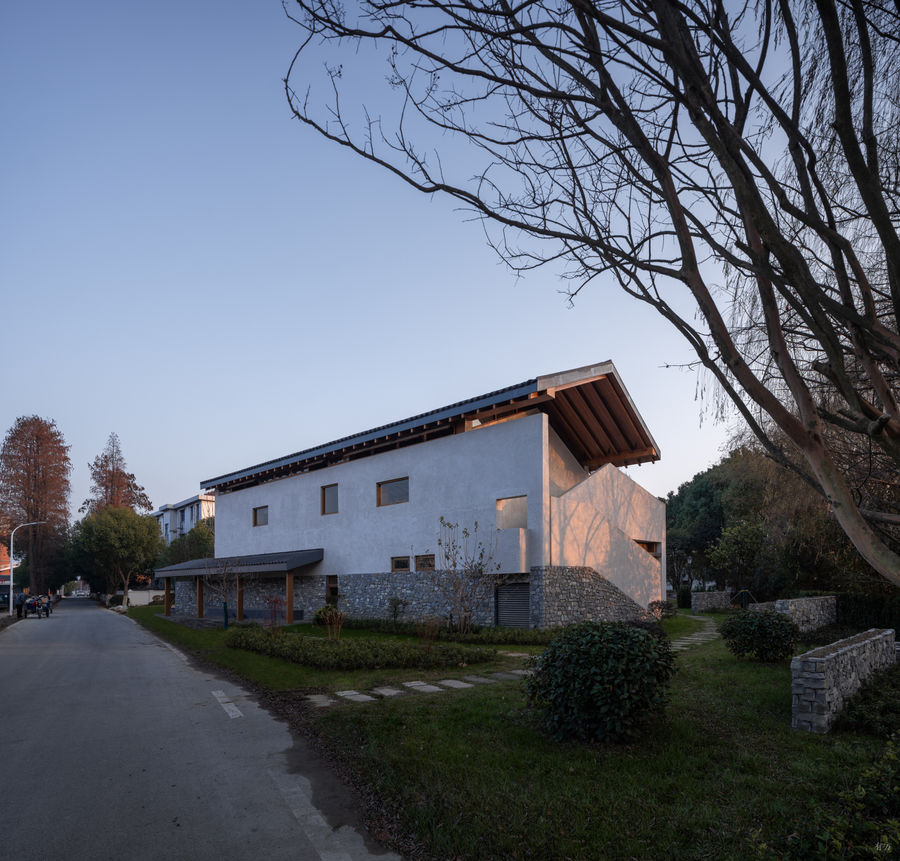
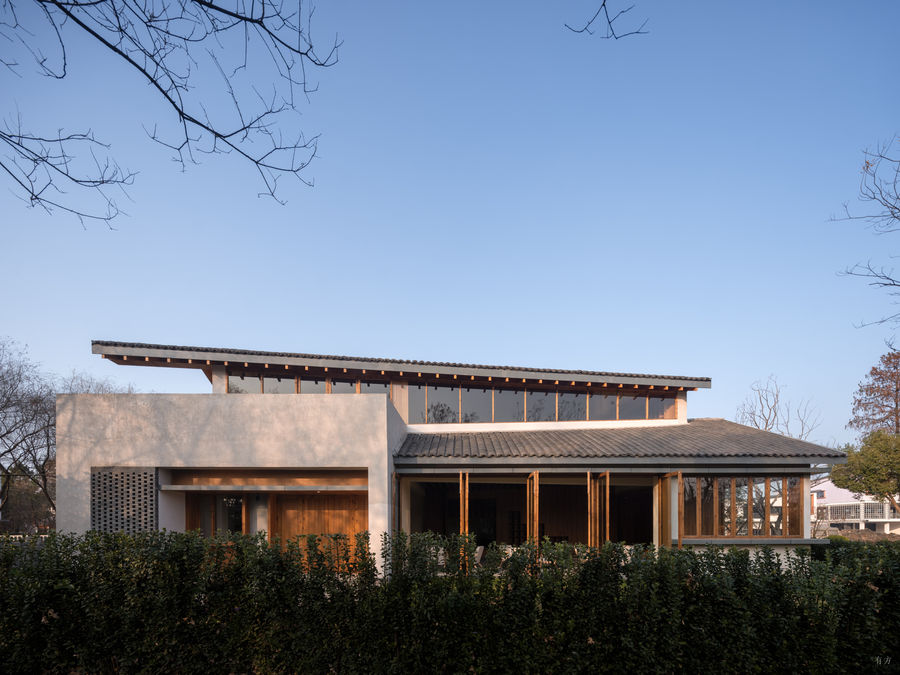
書屋外觀 ?吳清山
設(shè)計(jì)單位 森上建筑項(xiàng)目地址 浙江嘉興完成時(shí)間 2024年3月建筑面積 400平方米
本文文字由森上建筑提供。
伯鴻?quán)l(xiāng)村書屋
陸費(fèi)伯鴻,復(fù)姓陸費(fèi),名逵,號(hào)少滄,祖籍浙江桐鄉(xiāng),是我國(guó)著名教育家、出版家,中華書局的創(chuàng)始人。2018年桐鄉(xiāng)市委決定采用桐鄉(xiāng)名人——“中國(guó)書業(yè)先驅(qū)”陸費(fèi)逵之名,出臺(tái)了《關(guān)于建設(shè)伯鴻城市書房(書香驛站)的實(shí)施方案》,并率先在市區(qū)及洲泉、烏鎮(zhèn)等中心鎮(zhèn)區(qū)試點(diǎn)建設(shè),打造覆蓋城鄉(xiāng)的“十分鐘閱讀圈”。Lu Fei Bohong, surname Lu Fei and first name Kui, pseudonym Shaocang, original native place is Tongxiang, Zhejiang. He is a famous educator and publisher in China, also the founder of Zhonghua Book Company. In 2018, the Tongxiang government decided to adopt the name of the famous figure of Tongxiang - "Pioneer of Chinese Book Industry" Lu Feikui, and issued the "Implementation Plan for Building Bohong Urban Study (Book Fragrance Station)". It took the lead in pilot construction in the urban area and central towns such as Quanzhou and Wuzhen, creating a "ten minute reading circle" covering urban and rural areas.
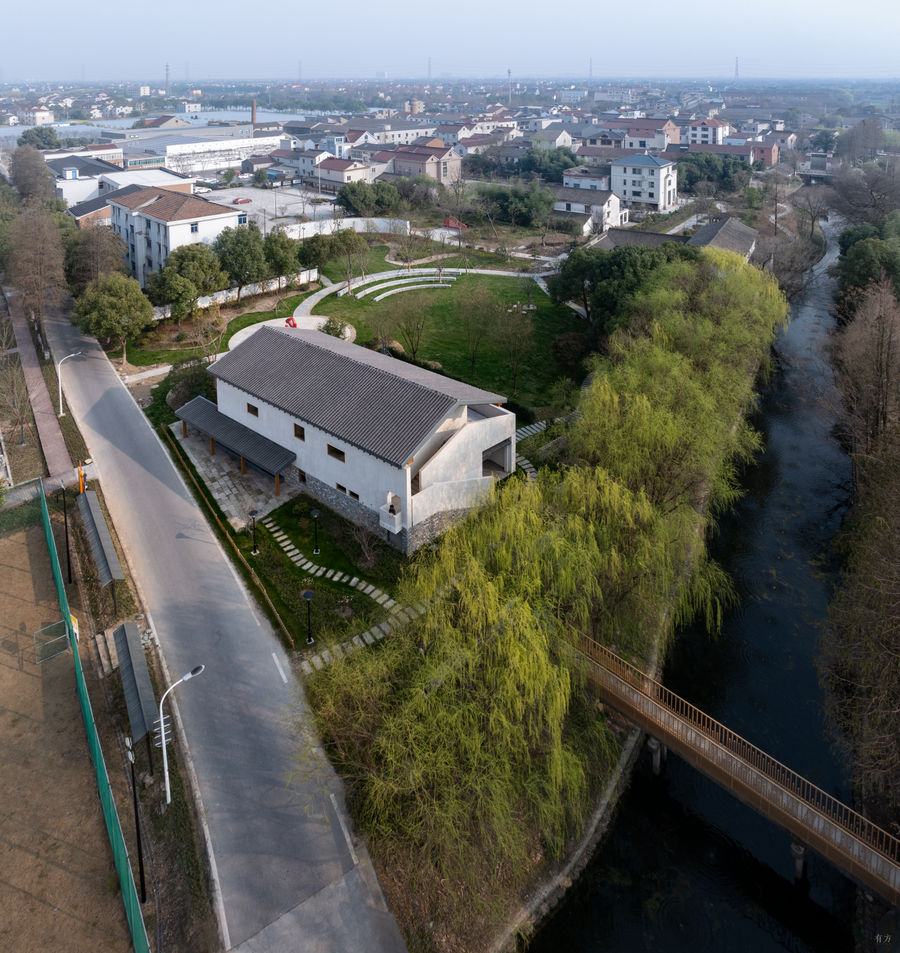
場(chǎng)地鳥瞰 ?吳清山
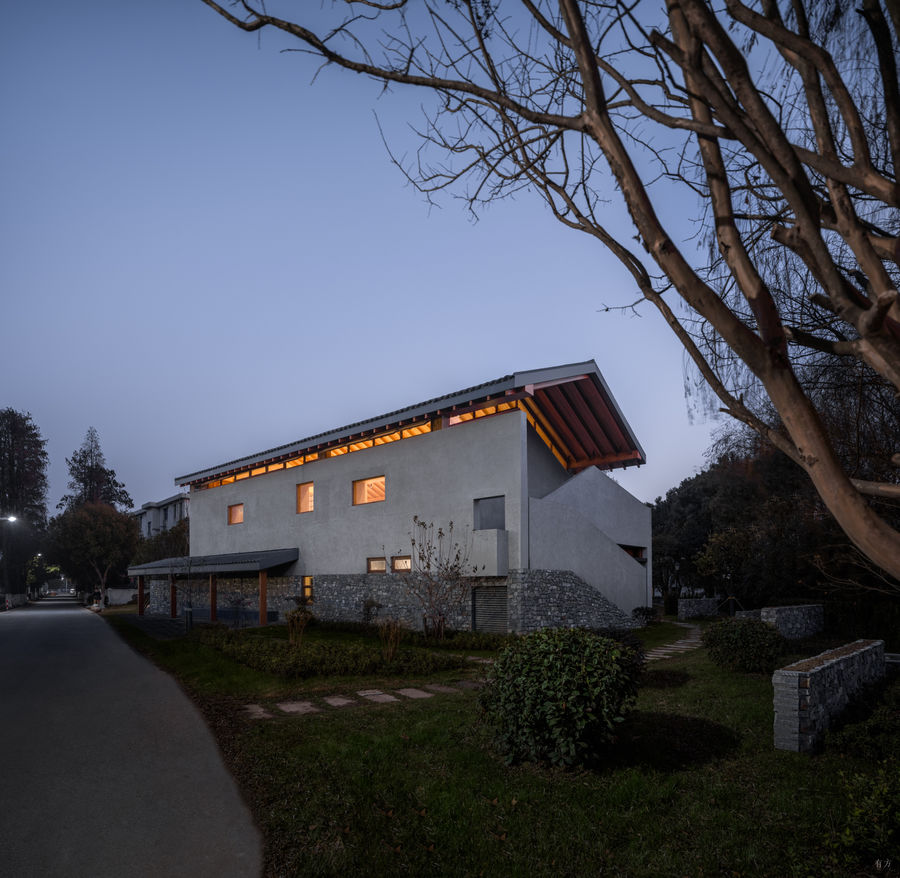
書屋外觀 ?吳清山
以書為媒,筑風(fēng)雅桐鄉(xiāng)。作為重要的公共文化空間,伯鴻?quán)l(xiāng)村書屋的建設(shè)是伯鴻系列閱讀平臺(tái)的重要衍生。鄉(xiāng)村布點(diǎn),均衡發(fā)展,通過(guò)對(duì)各村舊建筑的改建再利用以達(dá)成圖書資源服務(wù)覆蓋,讓閱讀新空間嵌入桐鄉(xiāng)的各個(gè)角落,進(jìn)一步構(gòu)建城鄉(xiāng)一體的公共閱讀服務(wù)體系,讓桐鄉(xiāng)這座城市的書香之氣更加歷久彌新。Using books as a medium to build an elegant Tongxiang. As an important public cultural space, the construction of Bohong Village Library is an important derivative of the Bohong series of reading platforms. Rural distribution, balanced development, and the renovation and reuse of old buildings in each village to achieve book resource service coverage, allowing new reading spaces to be embedded in every corner of Tongxiang, further building a public reading service system that integrates urban and rural areas, and making the study atmosphere of Tongxiang city more enduring.
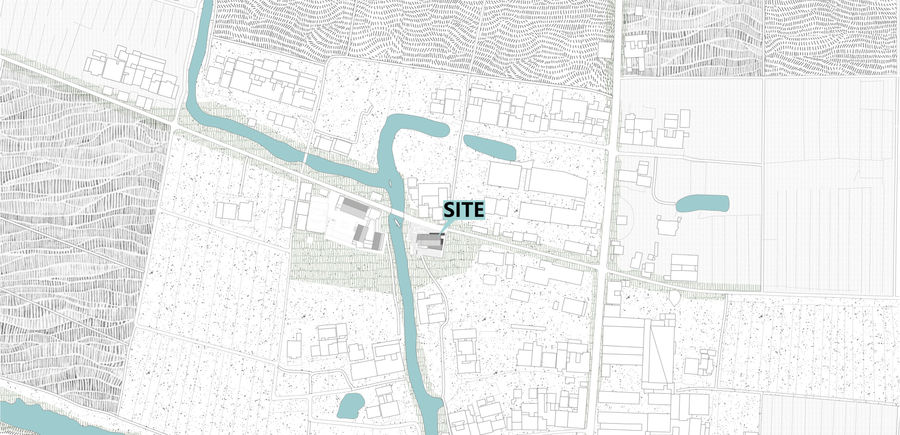
區(qū)位示意 ?森上建筑
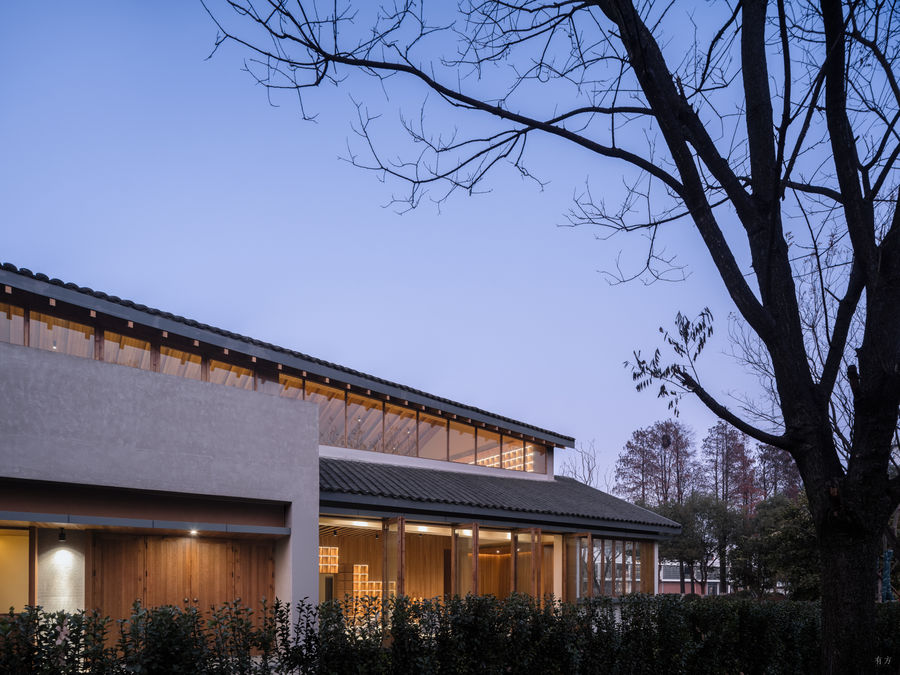
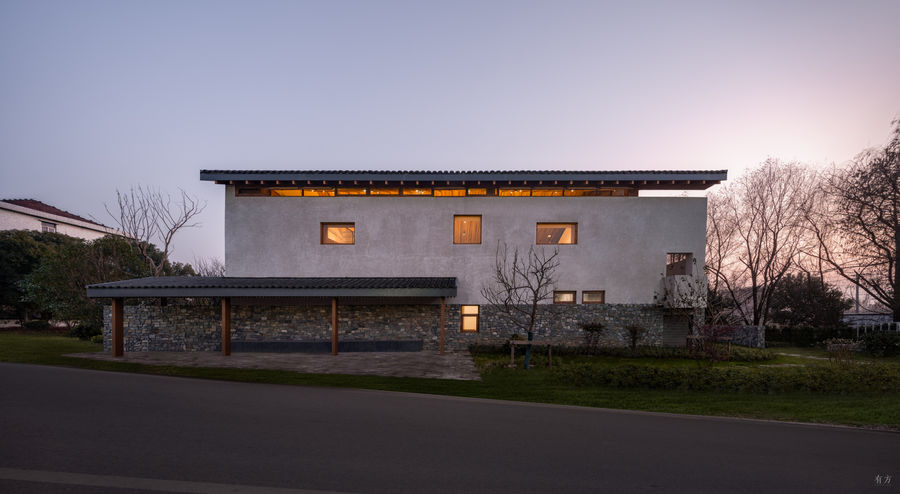
書屋外觀 ?吳清山
文化載體
河岸旁的小建筑組群是龍南村文化生活的集聚地,書屋與南側(cè)的鮑月景藝術(shù)館之間形成書畫聯(lián)動(dòng),開展教學(xué)培訓(xùn)、文藝創(chuàng)作及交流活動(dòng),豐富群眾的文化活動(dòng)。The small architectural complex by the riverbank is a gathering place for cultural life in Longnan Village. A calligraphy and painting linkage is formed between the library and the Baoyuejing Art Museum on the south side, carrying out teaching and training, artistic creation, and exchange activities, enriching the cultural activities of the masses.
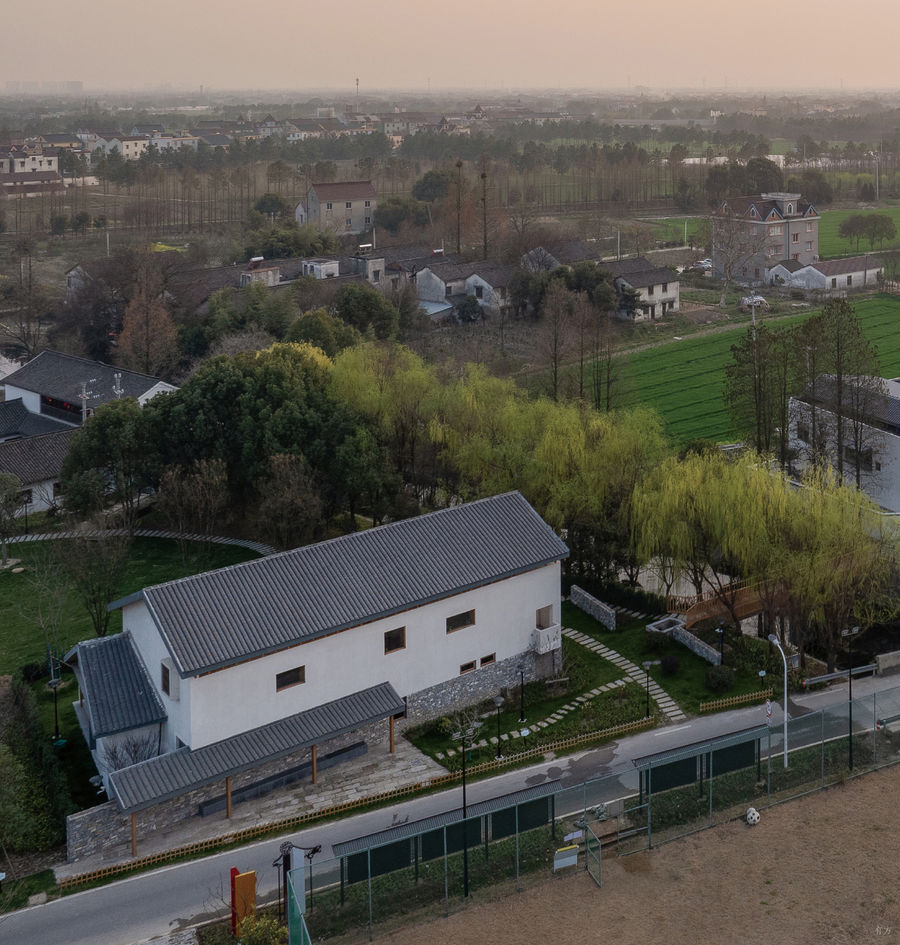
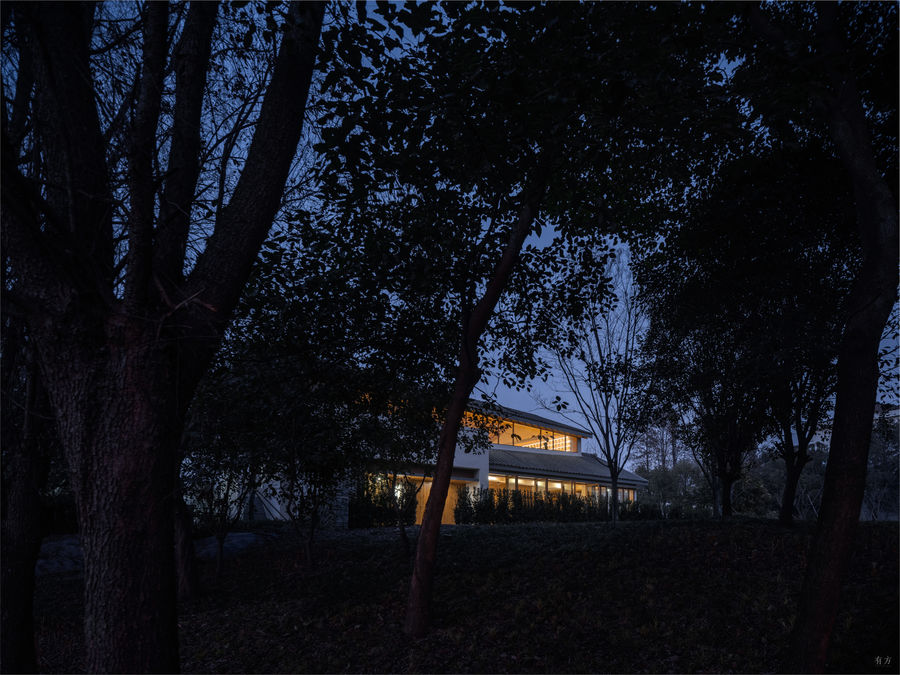
書屋與環(huán)境 ?吳清山
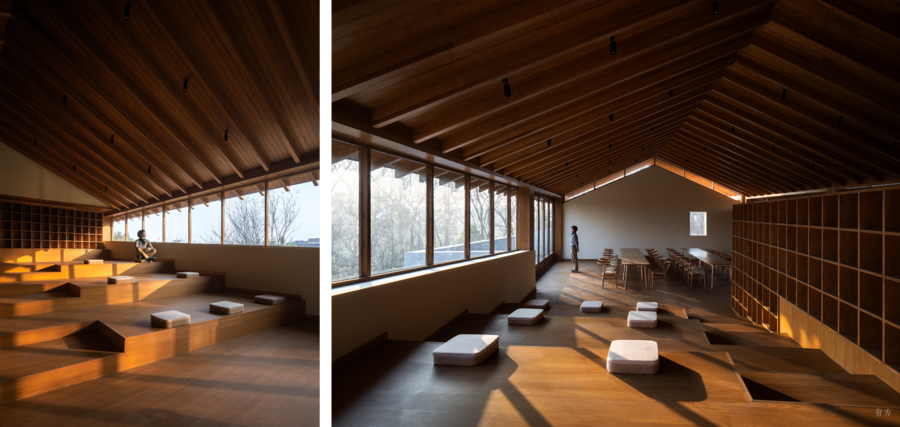
閱讀空間 ?吳清山
龍南村的伯鴻書屋采取了文人藝術(shù)工作室+鄉(xiāng)村書屋的組合模式。一層作為徐玲芬個(gè)人文學(xué)工作室入駐,以“詩(shī)畫龍南·唐吟文學(xué)沙龍”為載體,以文會(huì)友,開展讀書交流、寫作采風(fēng)、文學(xué)講座等活動(dòng)。二層則為基礎(chǔ)的閱覽室,供書籍陳列,為村民提供自由閱讀的空間。這種“文化伙伴”的運(yùn)營(yíng)模式,以文人名家吸引文學(xué)愛好者,促進(jìn)村民詩(shī)友間的文化交流,讓單純的閱讀空間變成了文化共享空間。The Bohong Library in Longnan Village adopts a combination model of literati art studios and rural libraries. The first floor, as Xu Lingfen's personal literary studio, has been settled in, using the "Poetry and Painting Longnan · Tang Yin Literature Salon" as a carrier to conduct activities such as reading exchange, writing style collection, and literary lectures through literary gatherings. The second floor serves as the basic reading room for displaying books and providing villagers with a space for free reading. This "cultural partnership" operation model attracts literary enthusiasts with literati and masters, promotes cultural exchange among villagers and poetry friends, and turns a simple reading space into a cultural sharing space.
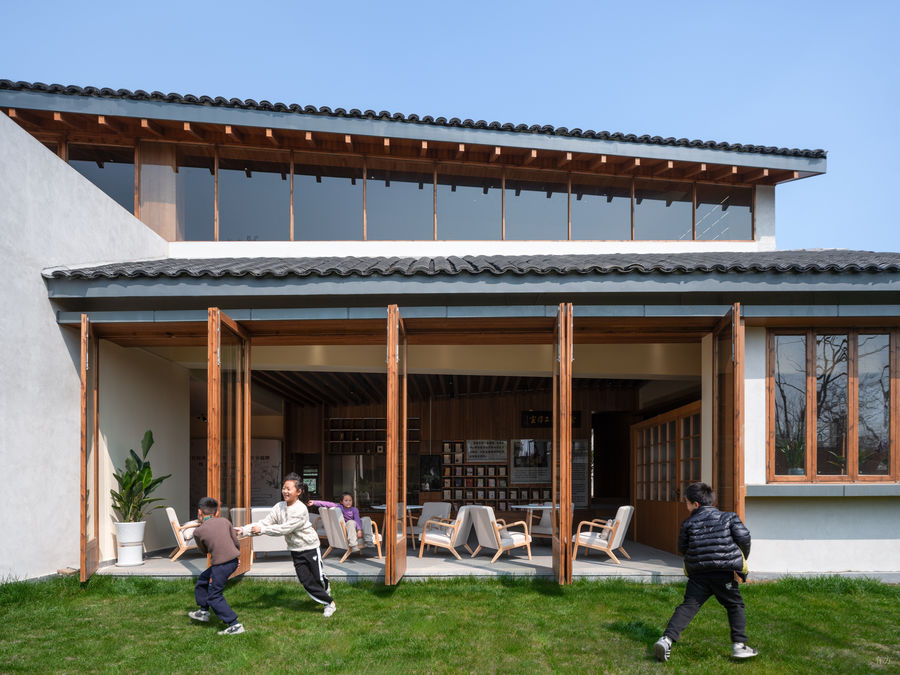
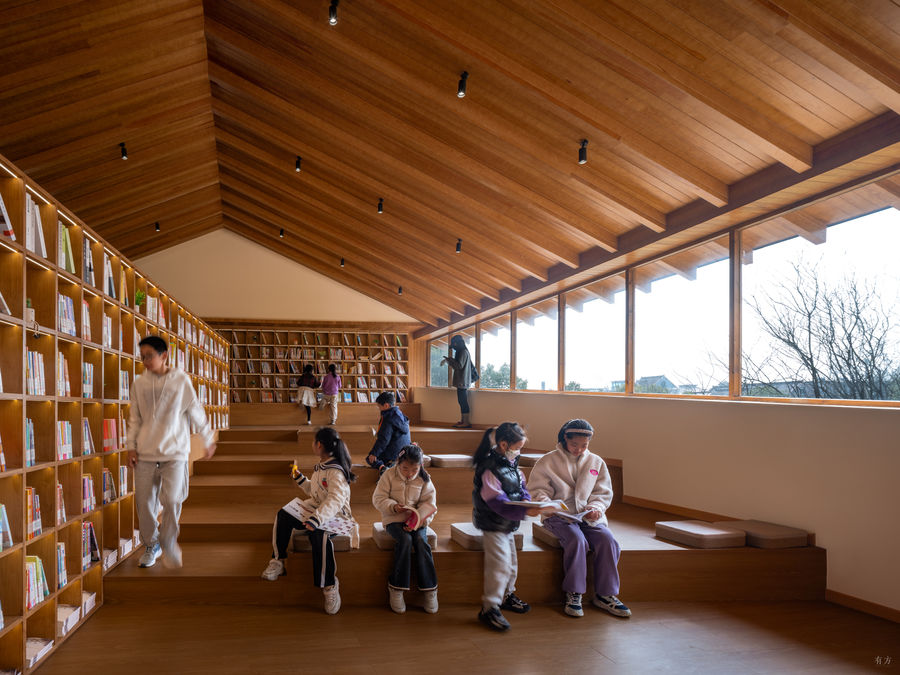
書屋的日常與讀書活動(dòng) ?吳清山
疊屋
結(jié)合功能與使用方式,建筑設(shè)計(jì)以打開的書籍為空間原型,疊置為空間組合形態(tài),汲取傳統(tǒng)民居的特征元素,打造具有鄉(xiāng)土文化的閱覽空間。Combining function and usage, the architectural design takes open books as the spatial prototype, stacking them as a spatial combination form, drawing on the characteristic elements of traditional residential buildings, and creating a reading space with local culture.

概念圖解 ?森上建筑
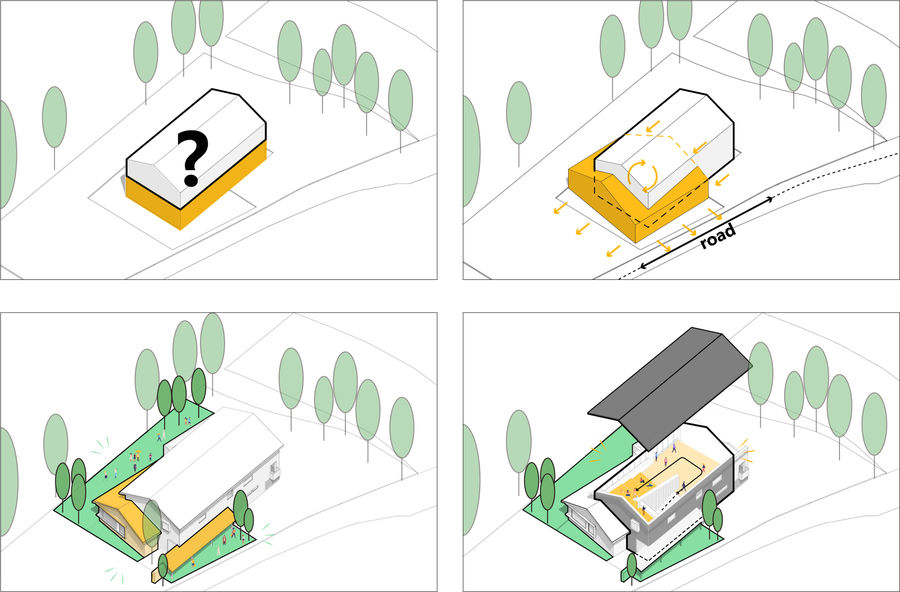
形體演變 ?森上建筑
建筑的形體沿水鄉(xiāng)駁岸與村路進(jìn)行了扭轉(zhuǎn),重疊的屋檐拓展出前廊、露臺(tái)等公共空間。錯(cuò)落的造型于內(nèi)形成了連接上下層的交通與交互空間,于外則銜接了自然的景致。建筑隱于河岸樹蔭,西側(cè)被植被圍繞,有著生動(dòng)的場(chǎng)所特質(zhì)。書屋的山墻與河岸景觀相呼應(yīng),藏于山墻內(nèi)的階梯延續(xù)了蜿蜒的汀步游徑,導(dǎo)向二層閱覽室門前的開放平臺(tái)。The shape of the building has been twisted along the waterfront and village roads, with overlapping eaves expanding into public spaces such as the front porch and terrace. The staggered shapes form a transportation and interaction space that connects the upper and lower layers inside, and connect the natural scenery outside. The building is hidden in the shade of the riverbank trees, surrounded by vegetation on the west side, and has vivid local characteristics. The mountain wall of the library echoes the riverbank landscape, and the stairs hidden within the mountain wall continue the winding path of walking, leading to the open platform in front of the second floor reading room door.
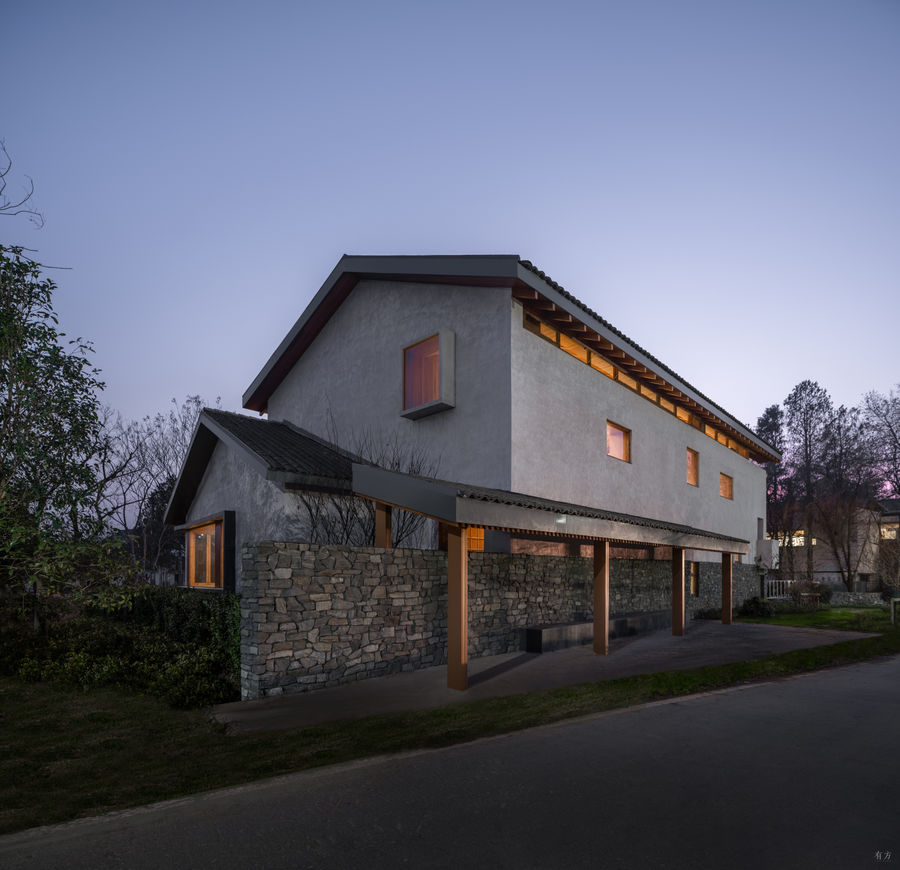
疊屋形態(tài) ?吳清山
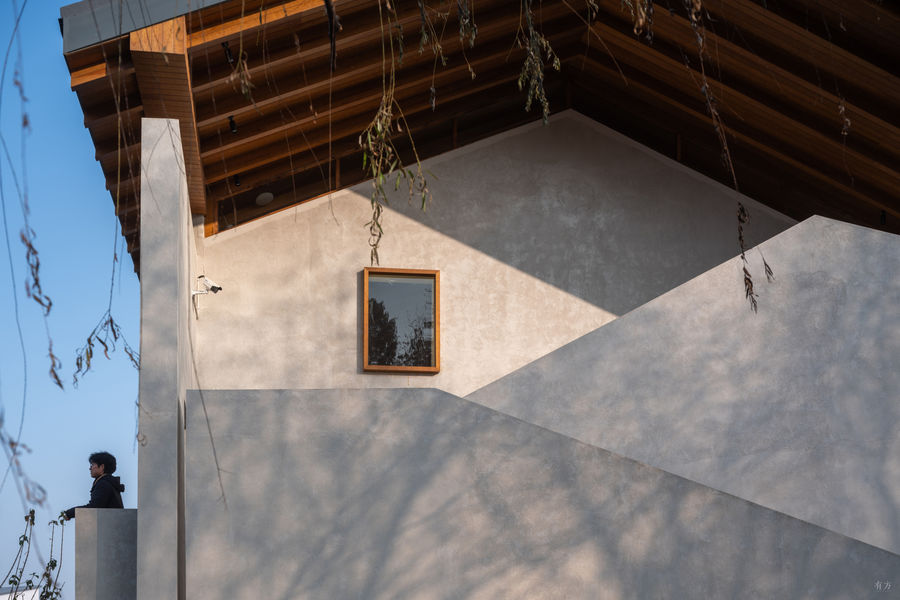
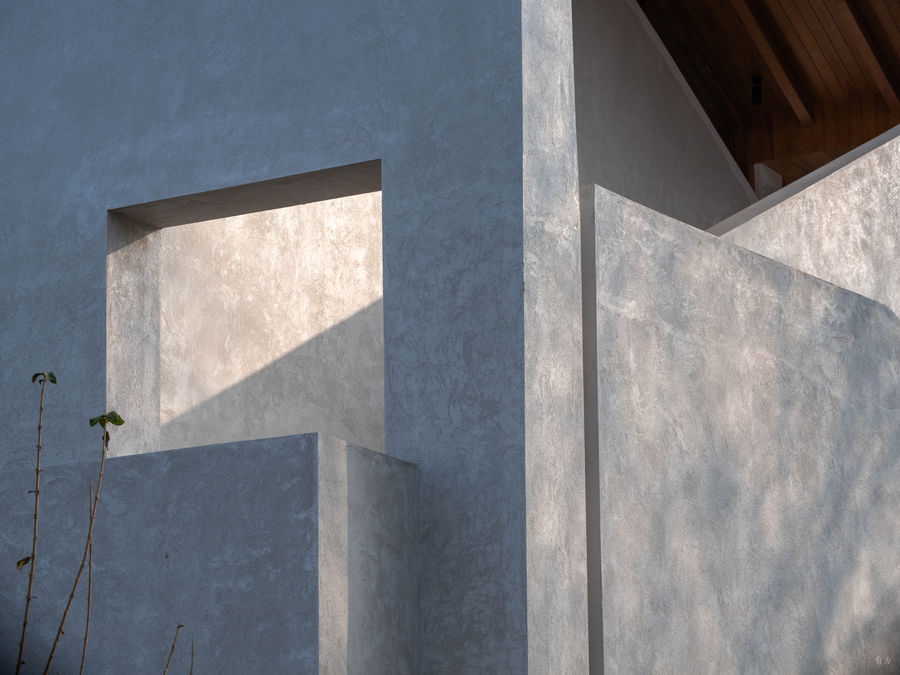
層疊的山墻 ?吳清山
室內(nèi)的一層以相對(duì)完整的空間格局為主體,應(yīng)對(duì)工作室和各種沙龍休閑活動(dòng)的靈活使用。南側(cè)大面積的落地門窗開啟時(shí),與被植物環(huán)抱的小院連成一體,檐下貫通院落形成開敞的半戶外區(qū),讓人們感受到自然田園的氛圍。閱覽室主要由書架和階梯地臺(tái)組成,存放鄉(xiāng)賢捐贈(zèng)圖書刊物的書柜系統(tǒng)貫穿了一二層的縱向空間,也起到了功能分區(qū)的作用。書柜上打開幾處窗洞,可遠(yuǎn)眺村貌,也可當(dāng)做座位隨坐隨讀。延展的階梯地臺(tái)剛好對(duì)應(yīng)一層傾斜的屋頂,側(cè)向面朝綠地和河岸,高窗接納了更多的自然采光,營(yíng)造出更為明快和有趣的閱讀場(chǎng)所。The indoor first floor is mainly composed of a relatively complete space, which is suitable for flexible use of studios and various salon leisure activities. When the large floor to ceiling doors and windows on the south side are opened, they connect with the small courtyard surrounded by plants, and the eaves run through the courtyard to form an open semi outdoor area, allowing people to feel the atmosphere of natural countryside. The reading room is mainly composed of bookshelves and stepped platforms. The bookshelf system for storing donated books and publications by local elites runs through the vertical space of the first and second floors, and also plays a role in functional zoning. Opening windows on the bookshelf allows for a distant view of the village, and can also be used as a seat to sit and read. The extended staircase platform corresponds perfectly to a sloping roof, facing the green space and riverbank on the side. The high windows allow for more natural lighting, creating a more lively and interesting reading space.
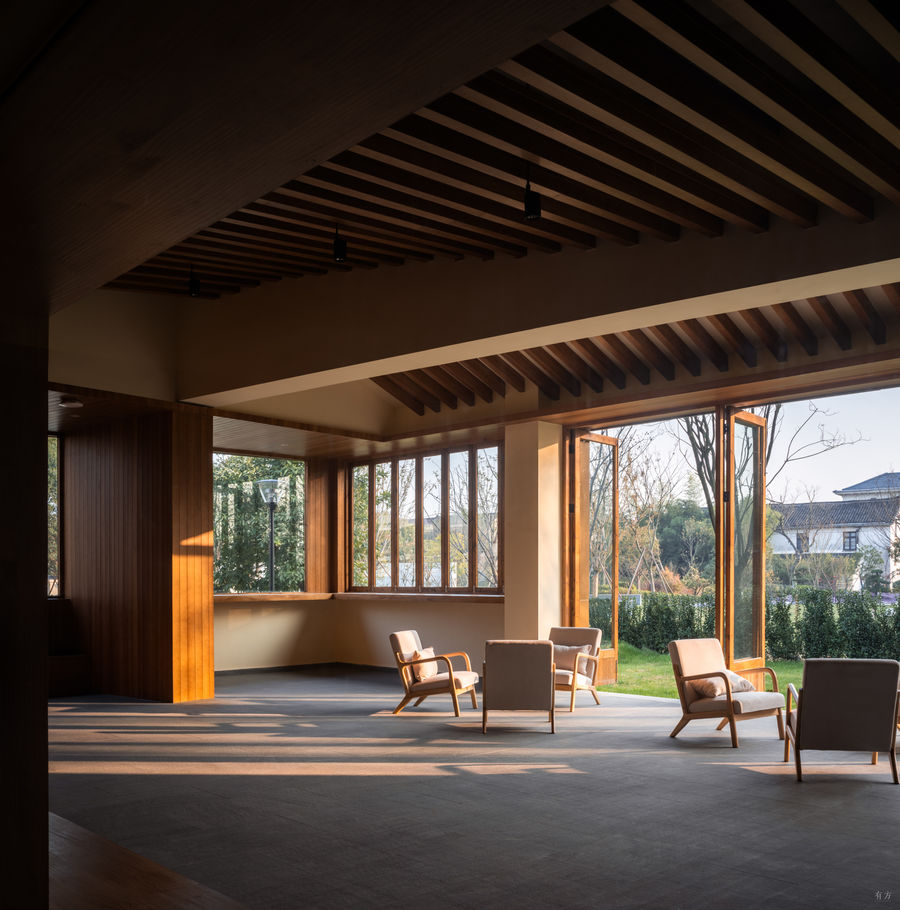
書屋一層 ?吳清山
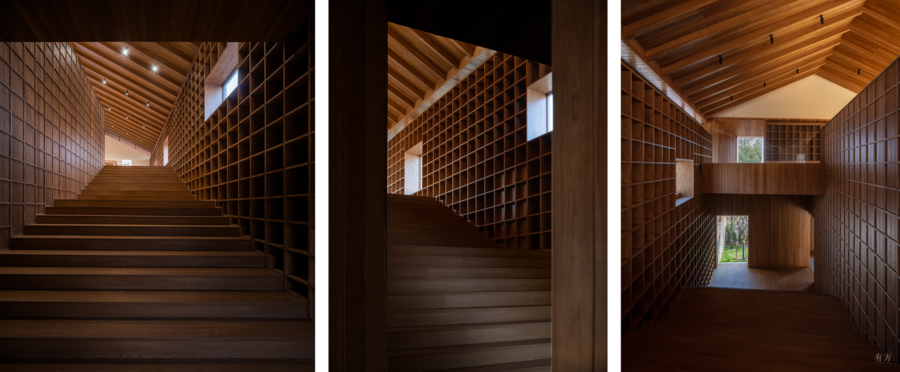
書架系統(tǒng) ?吳清山
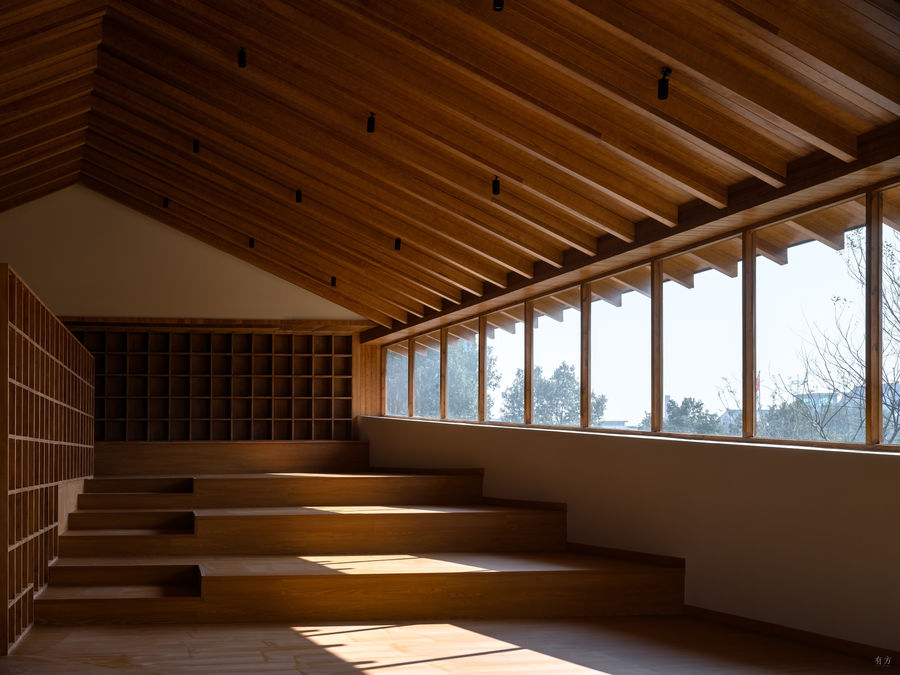
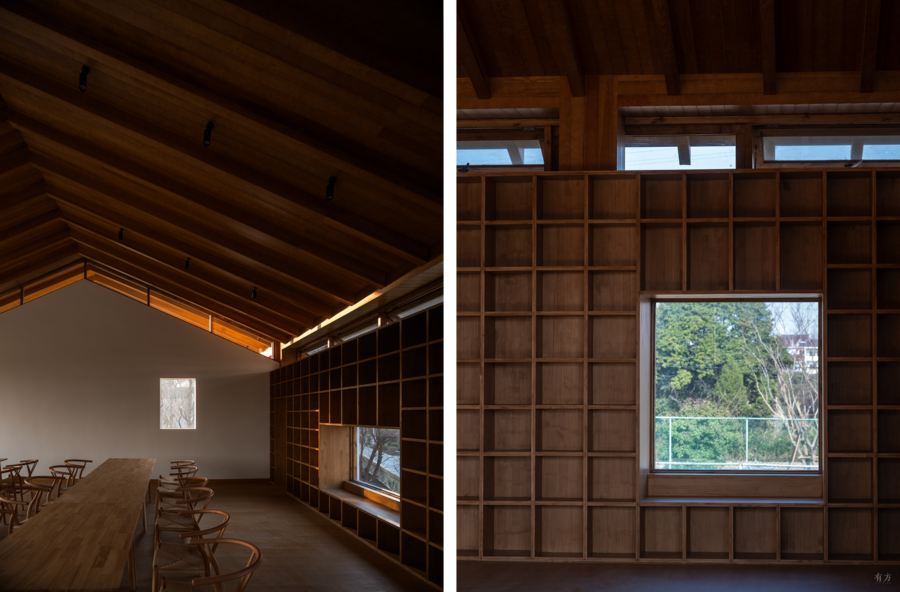
書屋二層 ?吳清山
鄉(xiāng)村公共性
龍南村伯鴻書屋的落成促成了文化共享的運(yùn)營(yíng),也實(shí)現(xiàn)了鄉(xiāng)村建筑和村落場(chǎng)所的融合。建筑東側(cè)貼鄰著村文化廣場(chǎng),建成后的書屋成為了廣場(chǎng)的標(biāo)志性節(jié)點(diǎn)。南側(cè)的院落與室內(nèi)結(jié)合緊密,成為了建筑空間的延伸。The completion of the Bohong Library in Longnan Village has facilitated the operation of cultural sharing and achieved the integration of rural architecture and village site. The east side of the building is adjacent to the village cultural square, and the completed library has become a landmark node of the square. The courtyard on the south side is closely integrated with the interior, becoming an extension of the architectural space.
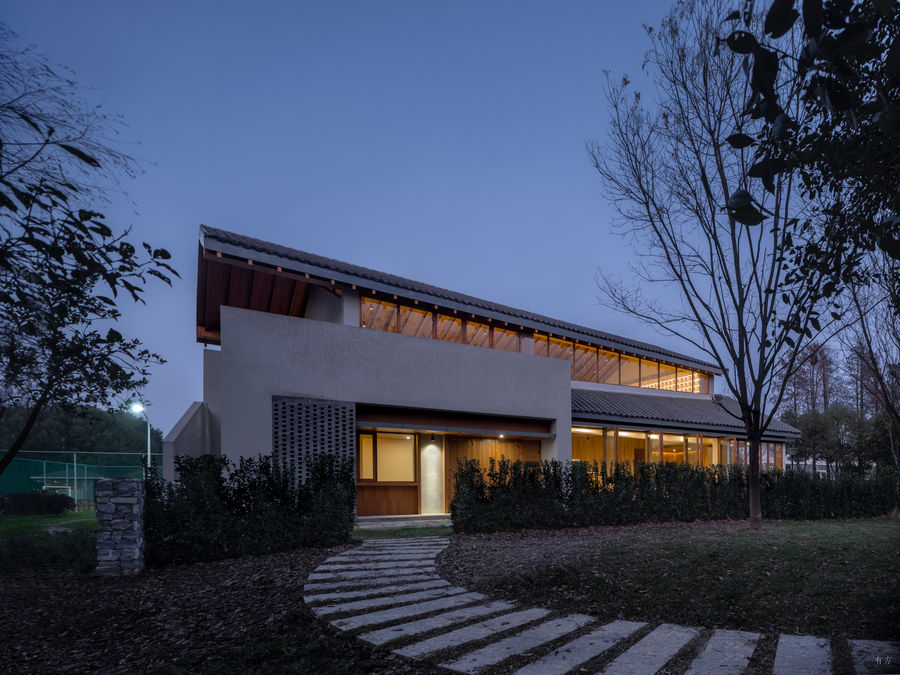
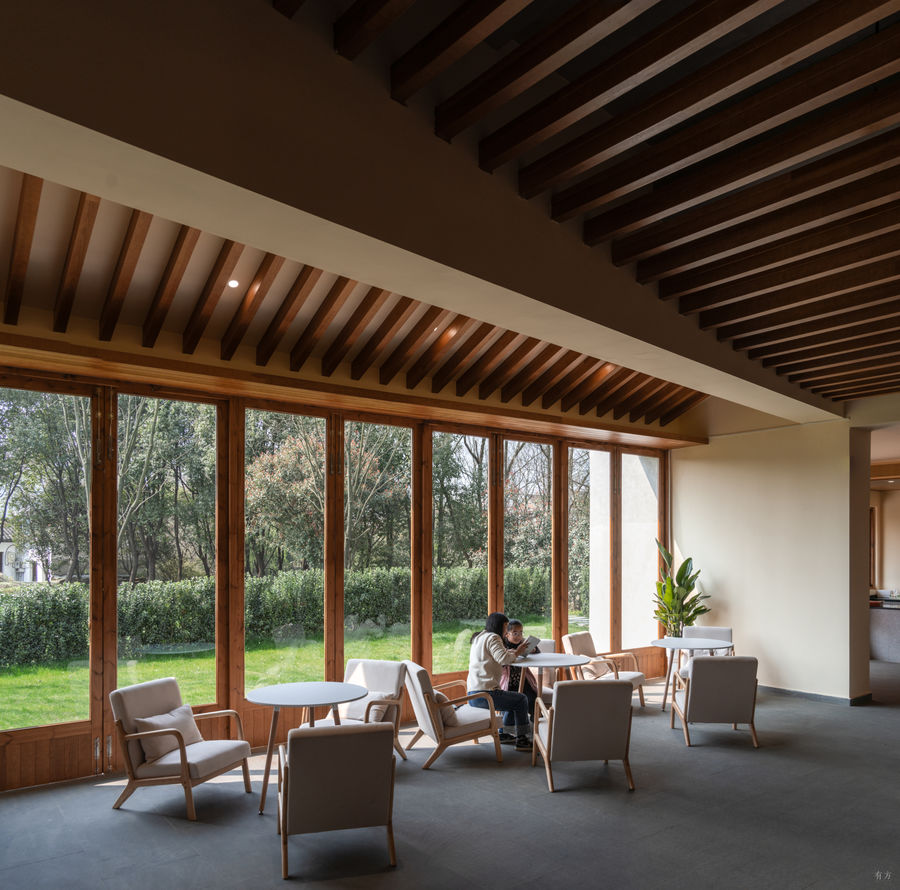
書屋一層與前院 ?吳清山
面向河岸的立面以樓梯和露臺(tái)為主要公共體系,大屋檐下的轉(zhuǎn)換空間可觀覽景致,平臺(tái)下也為村民預(yù)留了可以在室外下棋互動(dòng)的區(qū)域。原本宅基地北側(cè)與村路間有一狹小的夾角地塊,附著于建筑立面的披檐激活了這塊土地,變?yōu)榈缆放詳U(kuò)充的落腳空間,成為村民來(lái)往的一隅休憩之處。The facade facing the riverbank is mainly composed of stairs and terraces as the main public system. The conversion space under the large eaves provides a view of the scenery, and the platform also reserves an area for villagers to play and interact outdoors. Originally, there was a small corner plot between the north side of the homestead and the village road. The eaves attached to the building facade activated this piece of land, transforming it into an expanded foothold space next to the road and becoming a corner for villagers to rest and interact with.
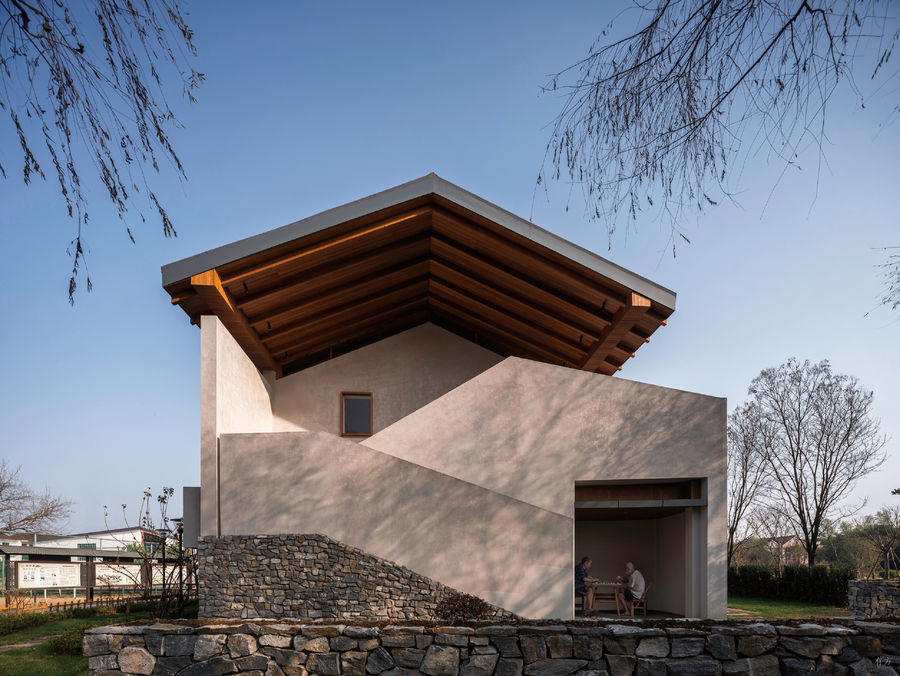
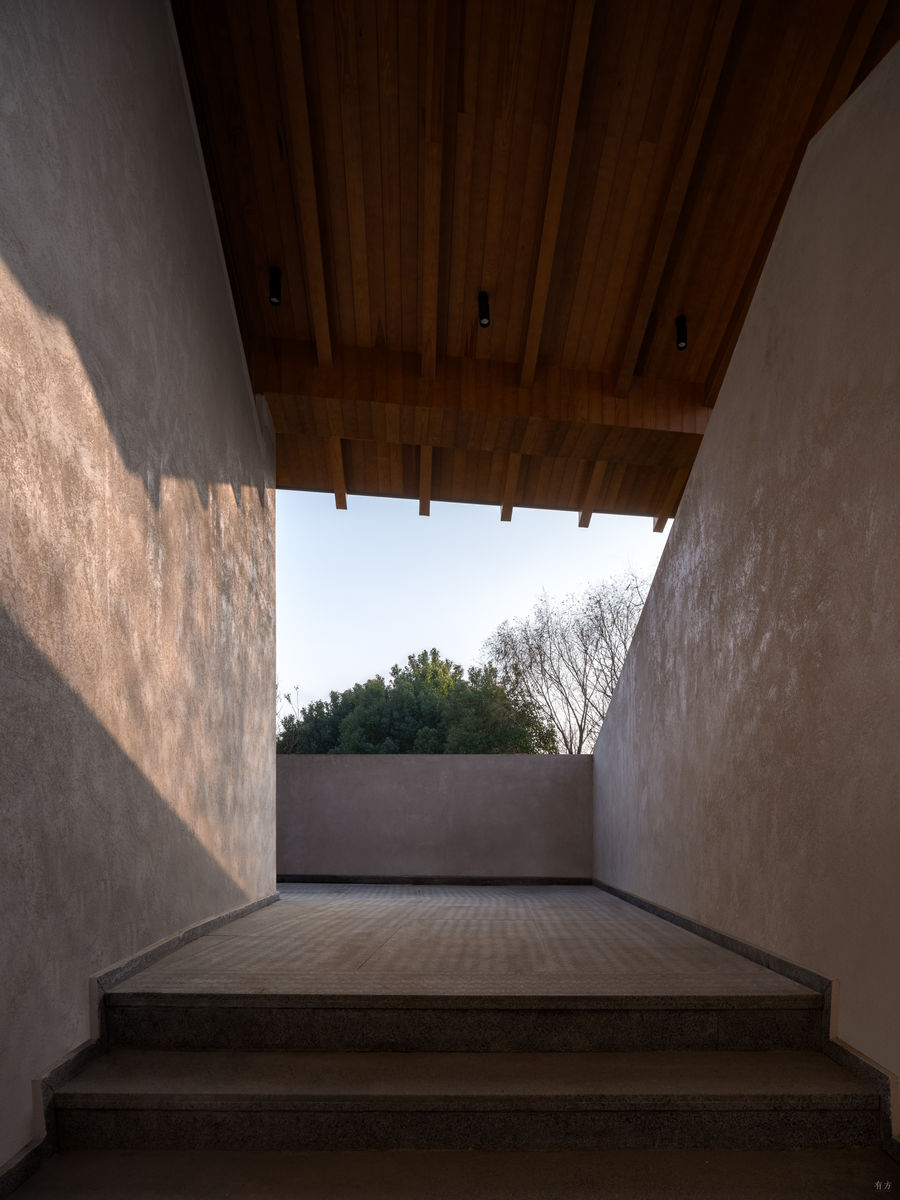
山墻一側(cè)的公共空間 ?吳清山
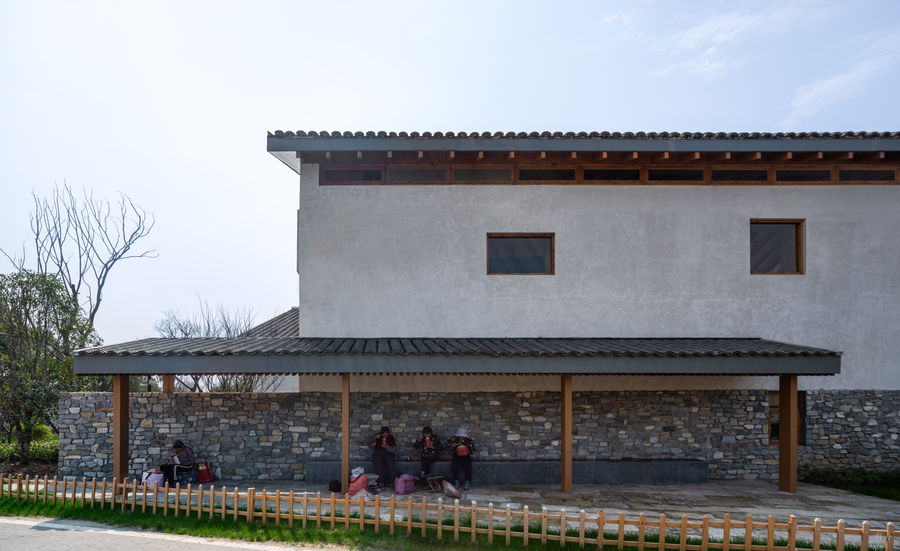
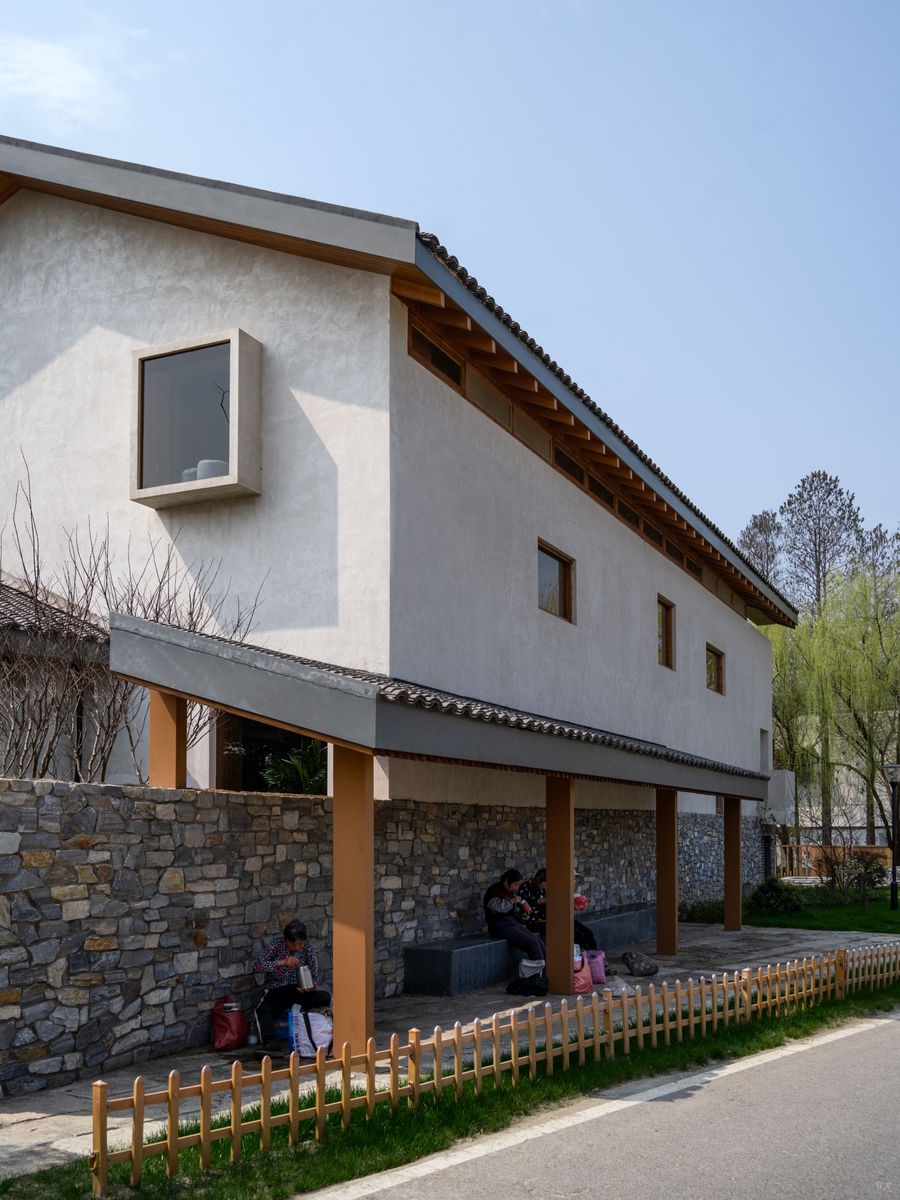
路邊檐下的休息區(qū) ?吳清山
龍南村伯鴻書屋作為鄉(xiāng)鎮(zhèn)級(jí)的公共閱讀服務(wù)體系,豐富了各年齡層村民的知識(shí)拓展,又真正成為了鄉(xiāng)村振興過(guò)程中最為重要的“精神糧倉(cāng)”。As a public reading service system as a township level, the Bohong library in Longnan Village has enriched the knowledge expansion of villagers of all ages and truly become the most important "spiritual granary" in the process of rural revitalization.
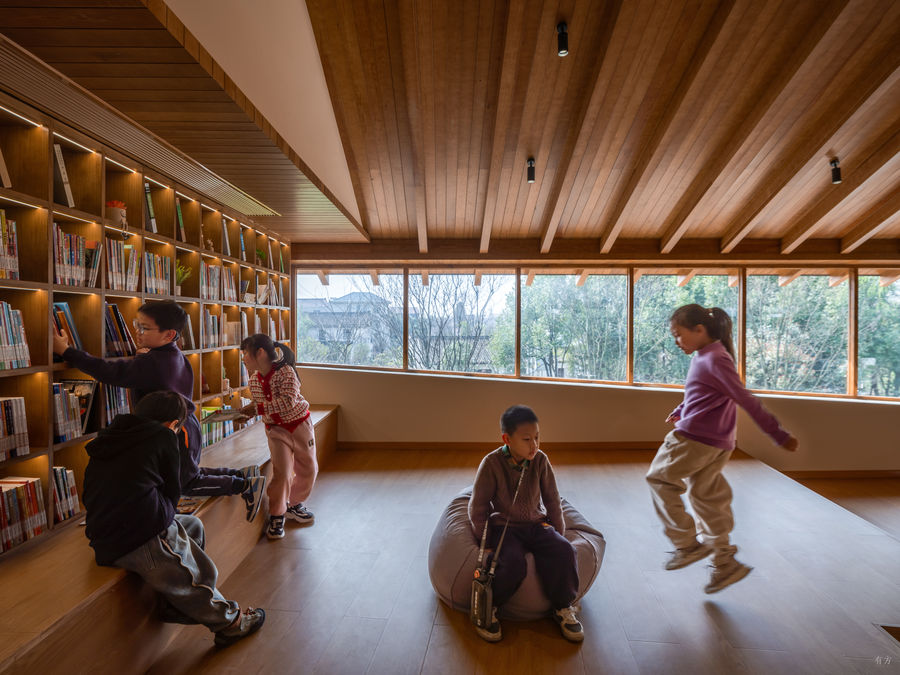
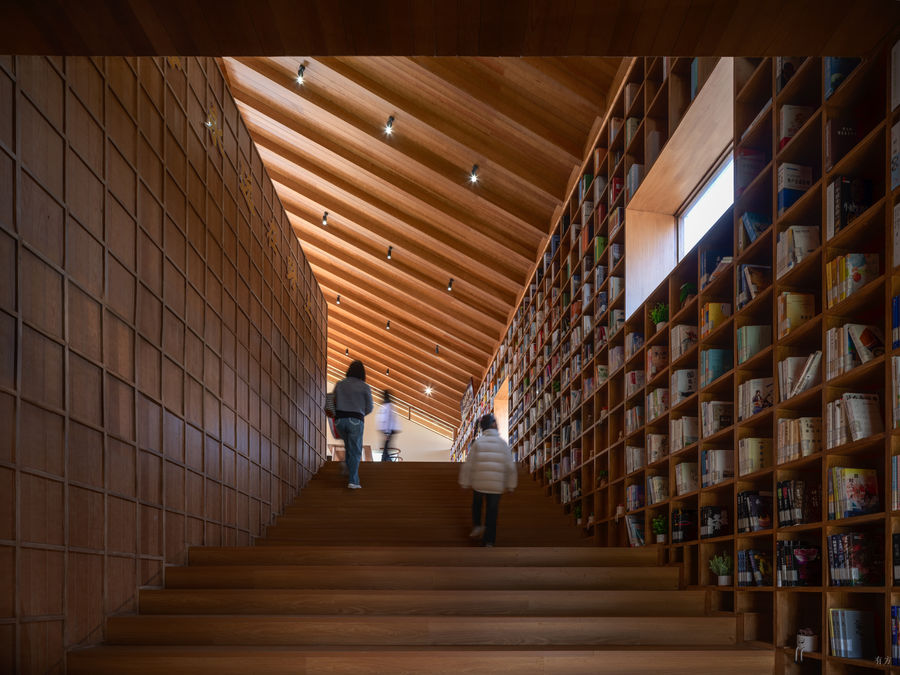
日常使用場(chǎng)景 ?吳清山
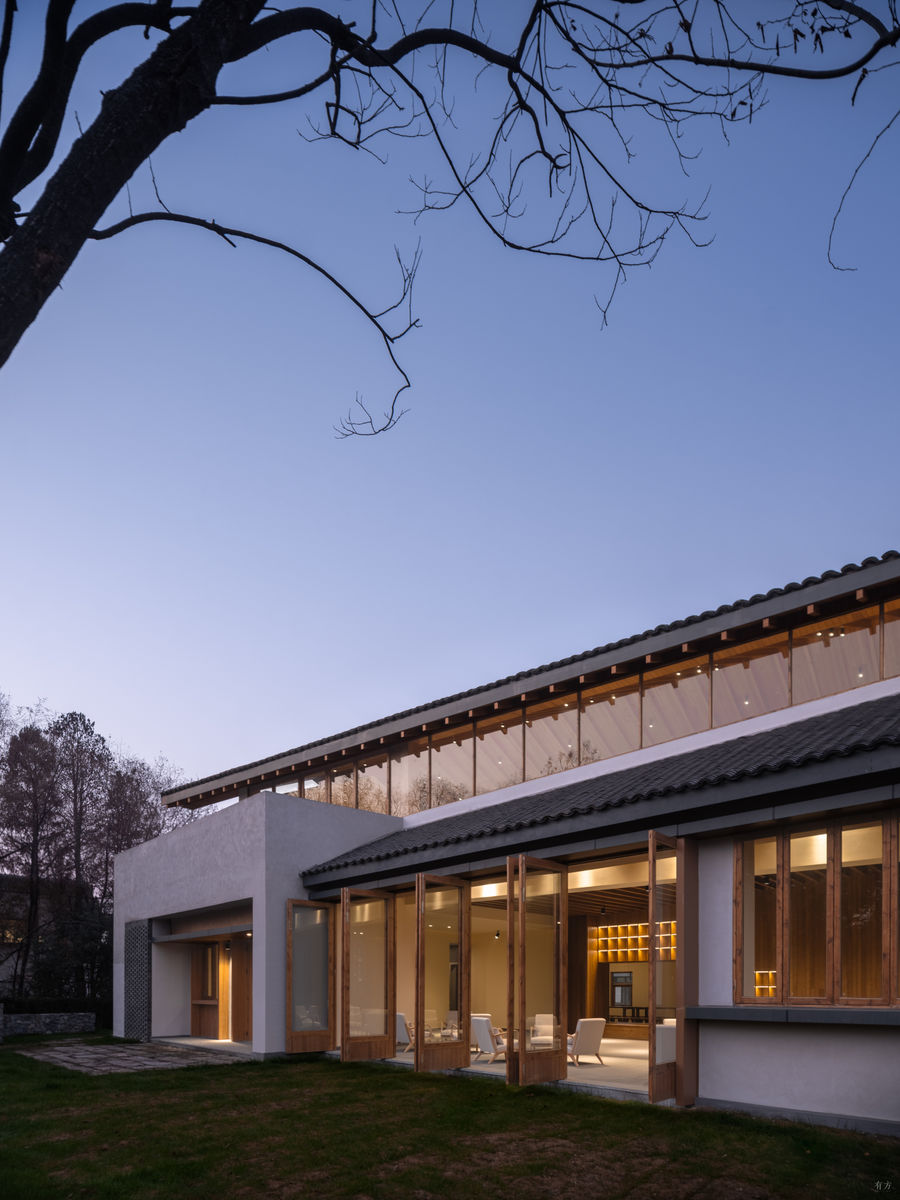
夜幕下的書屋 ?吳清山
設(shè)計(jì)圖紙 ▽
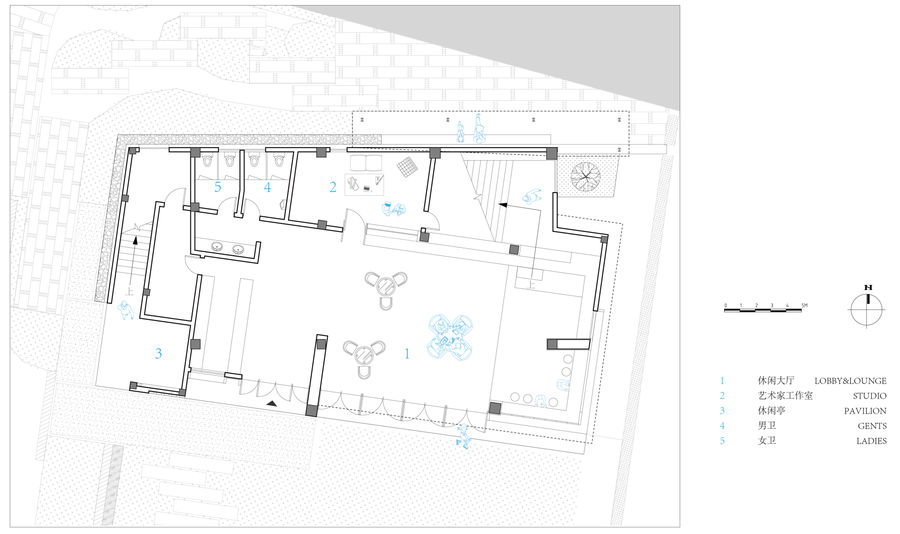
一層平面圖 ?森上建筑
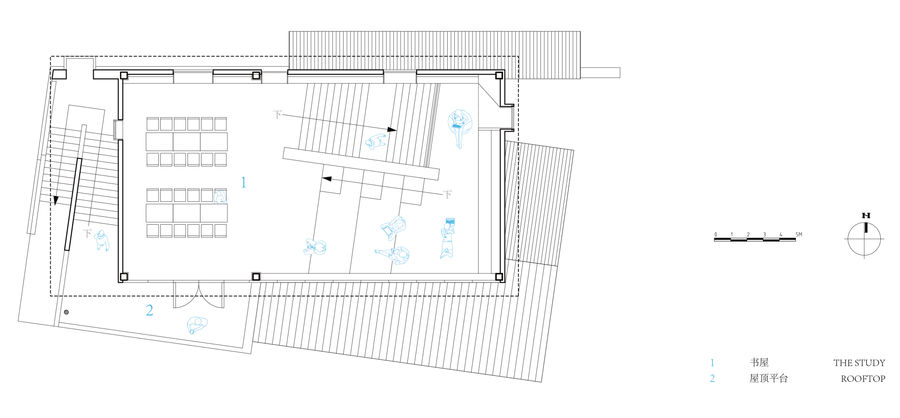
二層平面圖 ?森上建筑
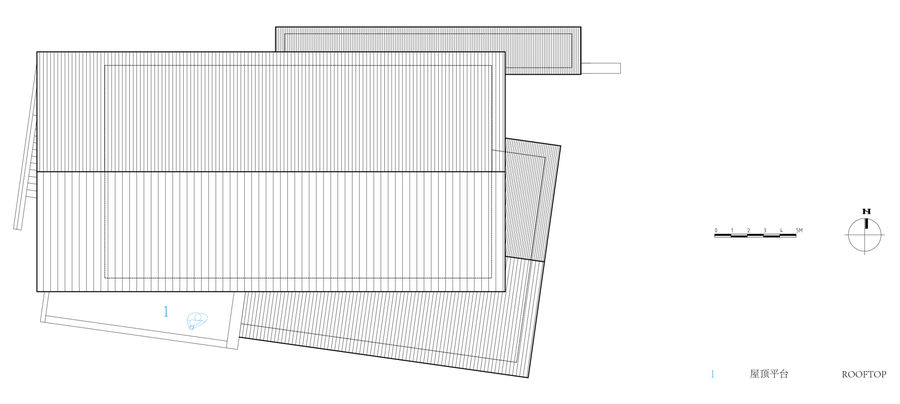
屋頂平面圖 ?森上建筑
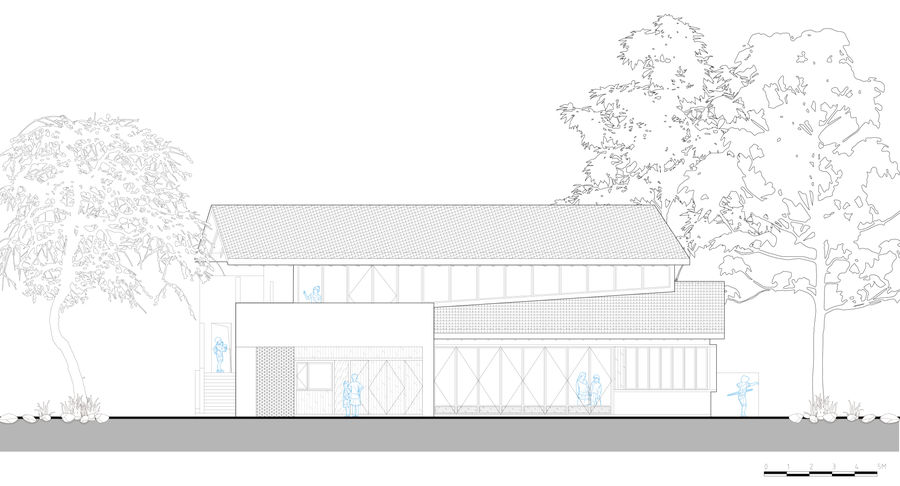
立面圖 ?森上建筑
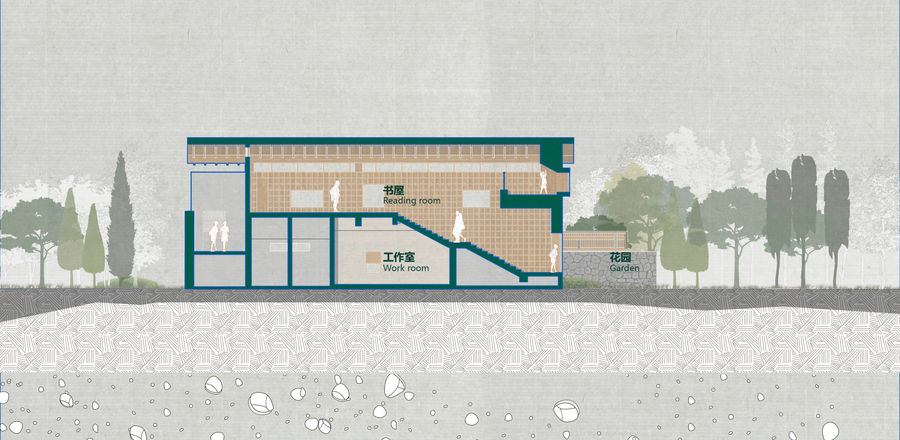
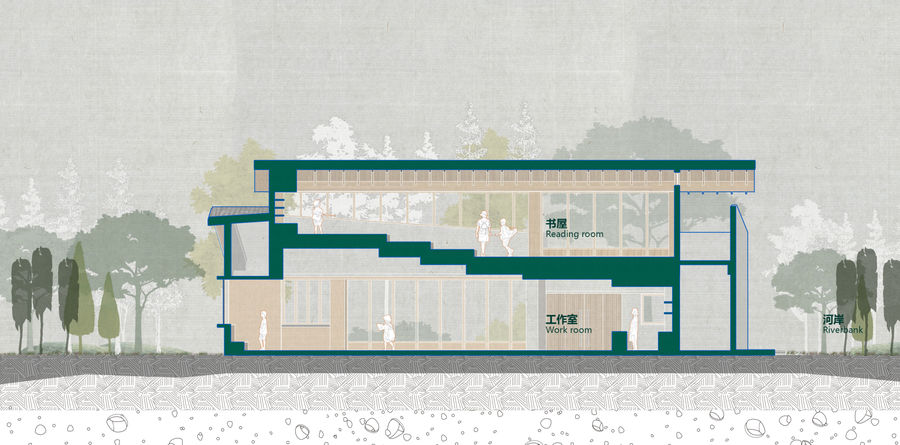
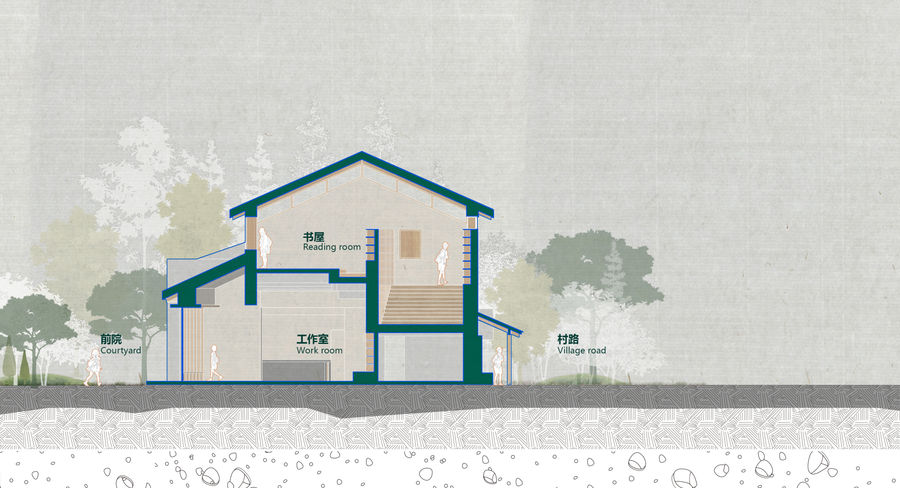
剖面圖 ?森上建筑
完整項(xiàng)目信息
項(xiàng)目名稱:龍南村伯鴻書屋
項(xiàng)目類型:建筑設(shè)計(jì)
設(shè)計(jì)單位:森上建筑
項(xiàng)目設(shè)計(jì):2022.9
完成年份:2024.3
主要設(shè)計(jì)團(tuán)隊(duì):章鈞添、孫鴻斐、王鑫、洪詩(shī)瑋、龔思源
合作團(tuán)隊(duì):結(jié)構(gòu)
顧問(wèn):蘇勤軍
項(xiàng)目地址:浙江桐鄉(xiāng)
建筑面積:400平方米
攝影版權(quán):吳清山
客戶:桐鄉(xiāng)市高橋街道龍南股份經(jīng)濟(jì)合作社
材料:鋼材、混凝土、青磚












評(píng)論(0)