

 上傳3D模型
 上傳SU模型
 合成全景
合成全景八作建筑設(shè)計 | 耀咖啡
白塔寺藥店得名于北京妙應(yīng)白塔寺,已有超過百年歷史。現(xiàn)白塔寺藥店原為妙應(yīng)白塔寺東側(cè)一座上世紀70年代末的五層建筑,2013年經(jīng)改造降為二層,立面風格與周圍統(tǒng)一。近年來,醫(yī)藥企業(yè)探索新業(yè)務(wù)成為一種趨勢。吸引更寬的年齡層,多樣化經(jīng)營成為白塔寺藥店新的改造著手點,Yao Cafe 耀咖啡應(yīng)運而生。
Named after Beijing Miaoying Baita Temple, Baita Temple Pharmacy has a history of more than hundred years. The current pharmacy was originally a five storeys building built on the east side of Miaoying Baita Temple in the 1970s and was renovated to a two storeys building in 2013 with a fa?ade that is now blended seamlessly with the surrounding architecture. In recent years, it has become a trend for pharmaceutical companies to expand its businesses and branch out. Drawing a broad age group and diversifying operations have become a new commencement for the renovation of Baita Temple Pharmacy – Yao Cafe came into being.
▼耀咖啡正門,Yao Cafe main entrance ?呂博
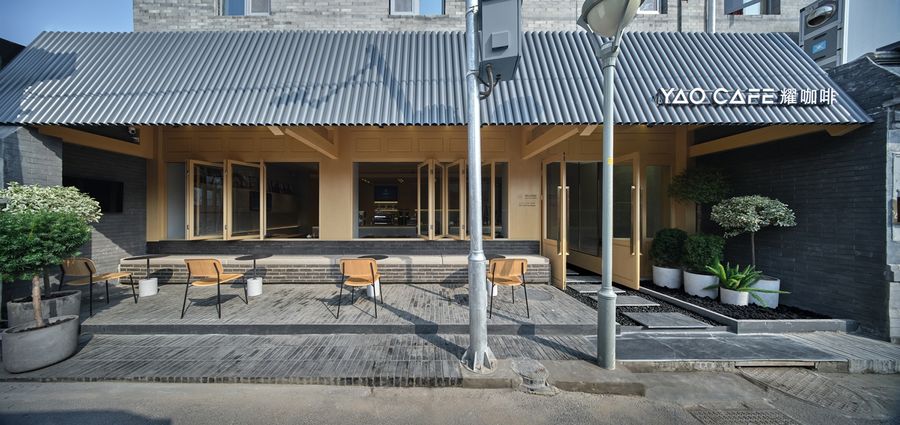
Yao Cafe 耀咖啡處于白塔寺藥店一層西北角,原為白塔寺藥店的經(jīng)營空間一部分。如何在加入新的業(yè)態(tài)的同時,也能對藥店的經(jīng)營起到帶動作用,并把傳統(tǒng)中醫(yī)文化傳遞給年輕一代是改造中需要考慮的重要問題。
▼耀咖啡與白塔寺的空間關(guān)系,Spatial relationship between the Yao Cafe and the Miaoying Baita Temple ?八作建筑設(shè)計事務(wù)所
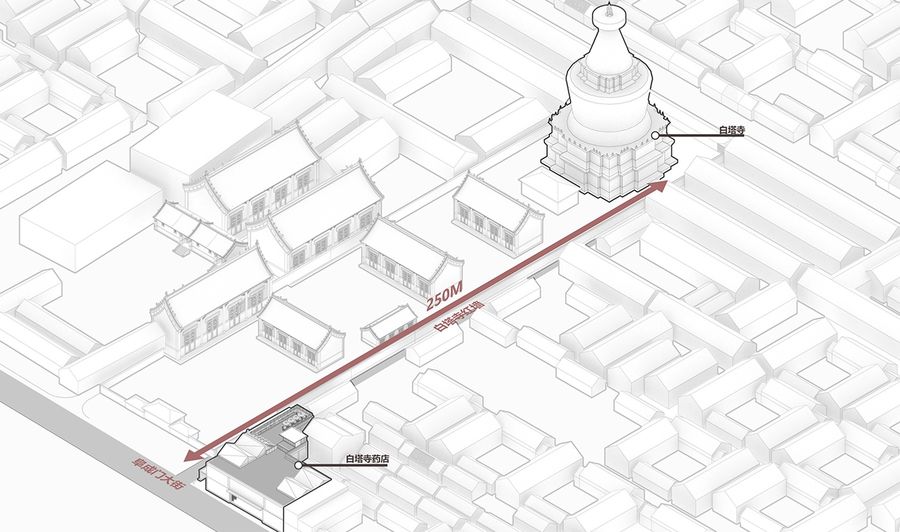
Yao Cafe is located in the northwest corner of the Baita Temple Pharmacy’s ground floor – part of the pharmacy’s business operation originally. Some key issues that need to be considered before the renovation include balancing between the new & old business model and passing on traditional Chinese medicine culture to the younger generation.
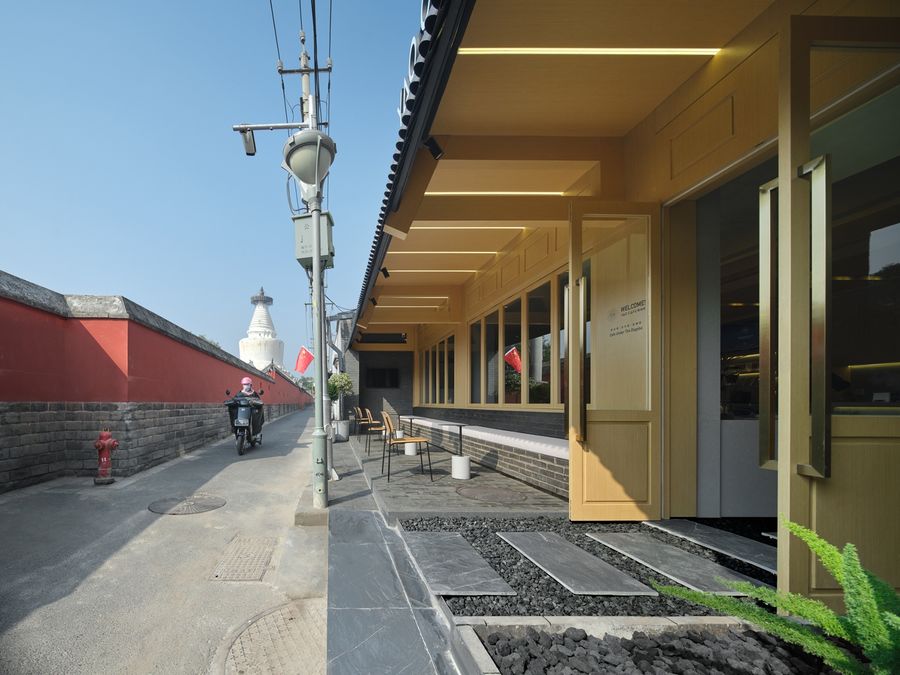
▼紅墻與咖啡館的對話,A dialogue between the red wall and the cafe ?呂博
咖啡館與藥店的融合
A ‘marriage’ of coffee shop and pharmacy
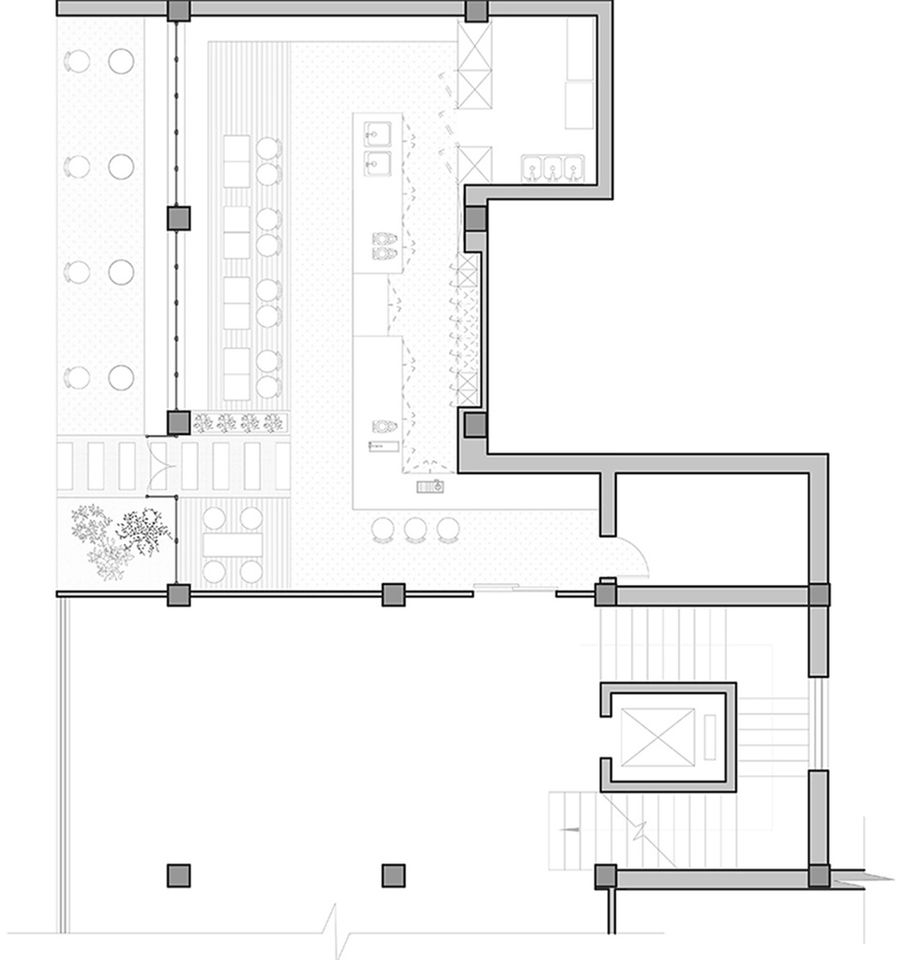
客人從石板小徑進入咖啡館后,需要使用位于藥店內(nèi)部的垂直交通才能來到位于屋頂?shù)穆短炀坝^平臺俯瞰白塔寺。過程中可以停下來欣賞傳統(tǒng)中藥的制作過程,感受中藥店氛圍。年輕群體可以在品咖啡,觀白塔的同時參觀傳統(tǒng)藥店,接觸中醫(yī)文化。
▼垂直樓層分布分析及軸側(cè)-首層空間爆炸分析,Axonometric drawing &Axonometric drawing-ground floor exploded diagram ?八作建筑設(shè)計事務(wù)所
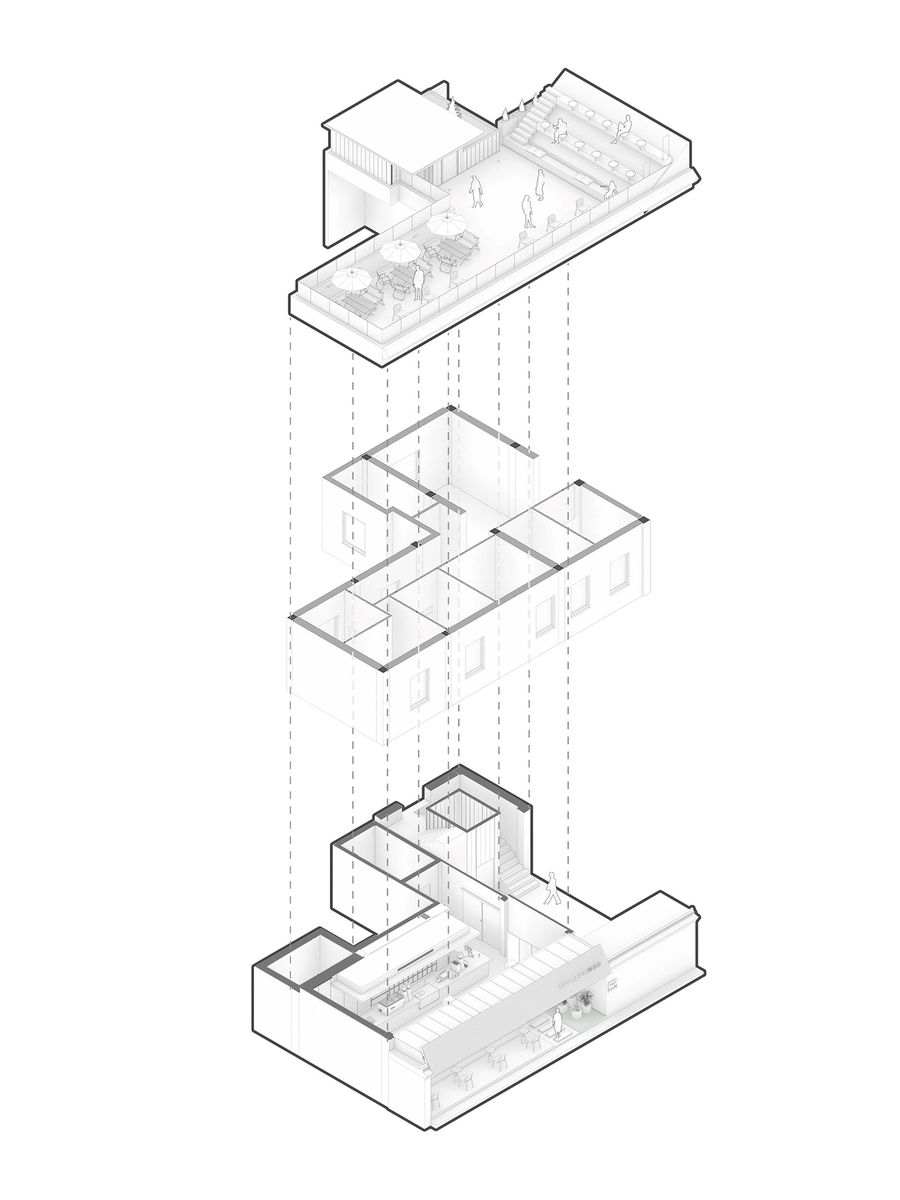
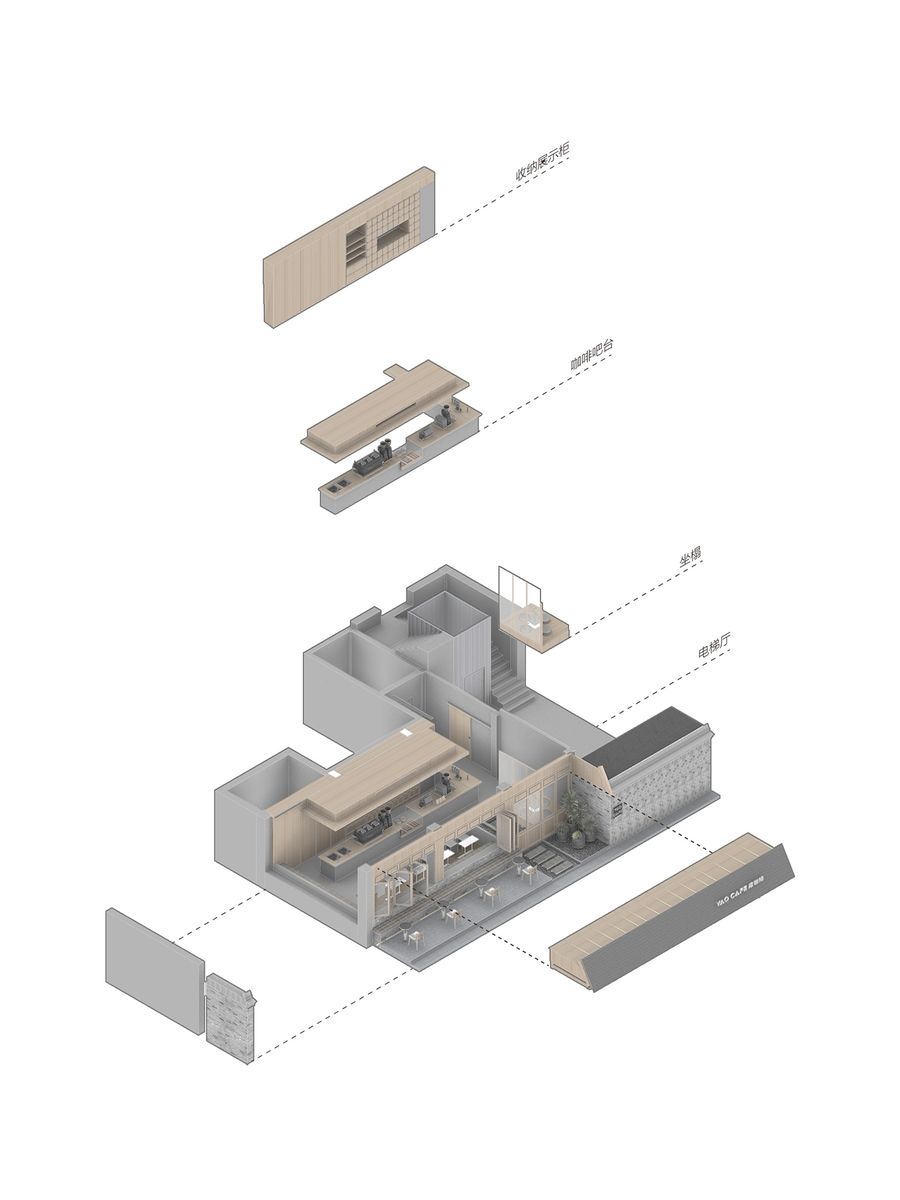
Entering the cafe through the stone path, visitors would need to use the staircase within the pharmacy to access the viewing deck on the rooftop overlooking the Beijing Miaoying Baita Temple. During their visit, visitors can stop-by to unravel the traditional Chinese medicine process and immerse in an atmosphere of the Chinese healing practices. While tasting the coffee and viewing the White Dagoba, young people are also interacting with the Chinese medicine culture informally.
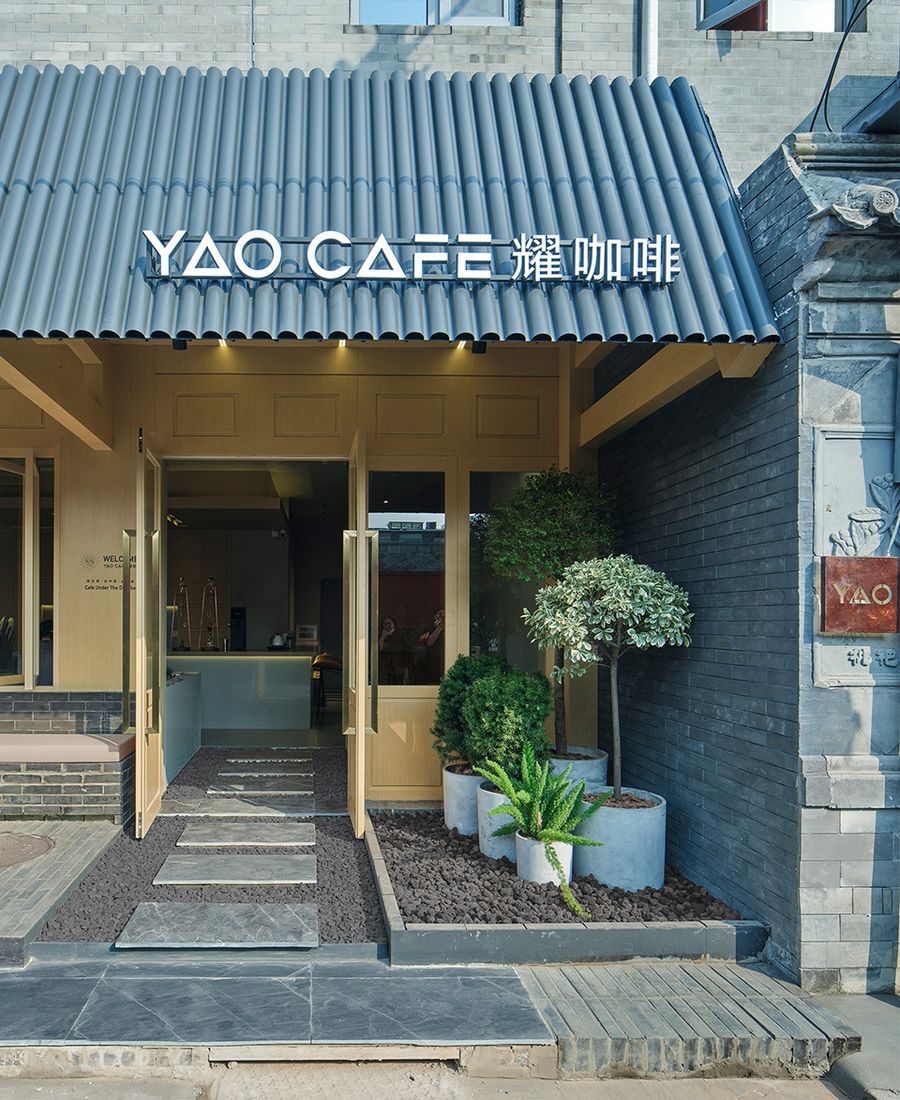
▼入口石板小徑,Main entrance stepping stone trail ?呂博
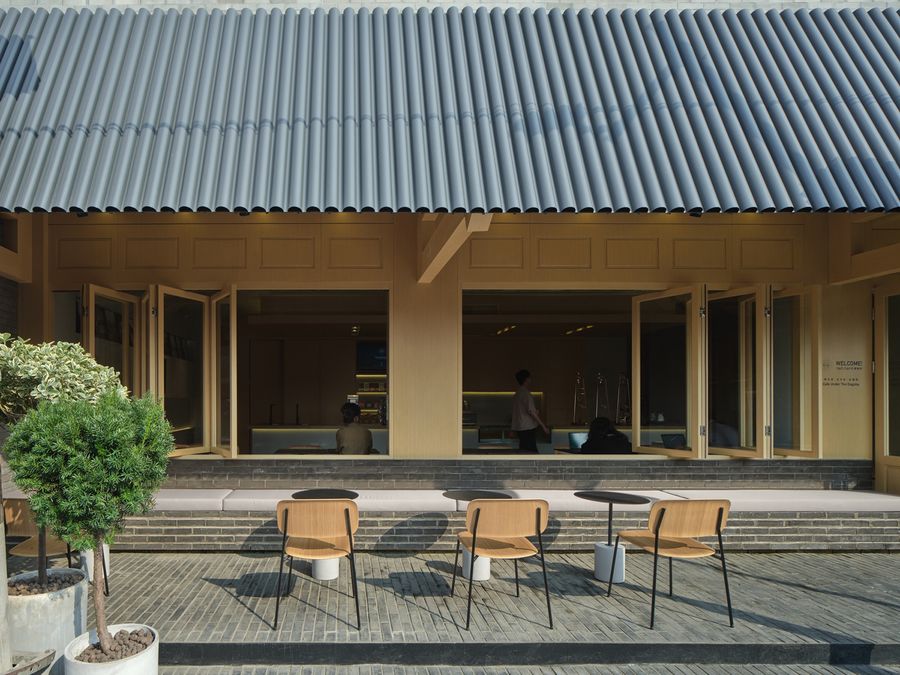
▼外擺空間的休息區(qū),Outdoor resting area ?呂博
紅墻與咖啡館的對話
A dialogue between the red wall and the cafe
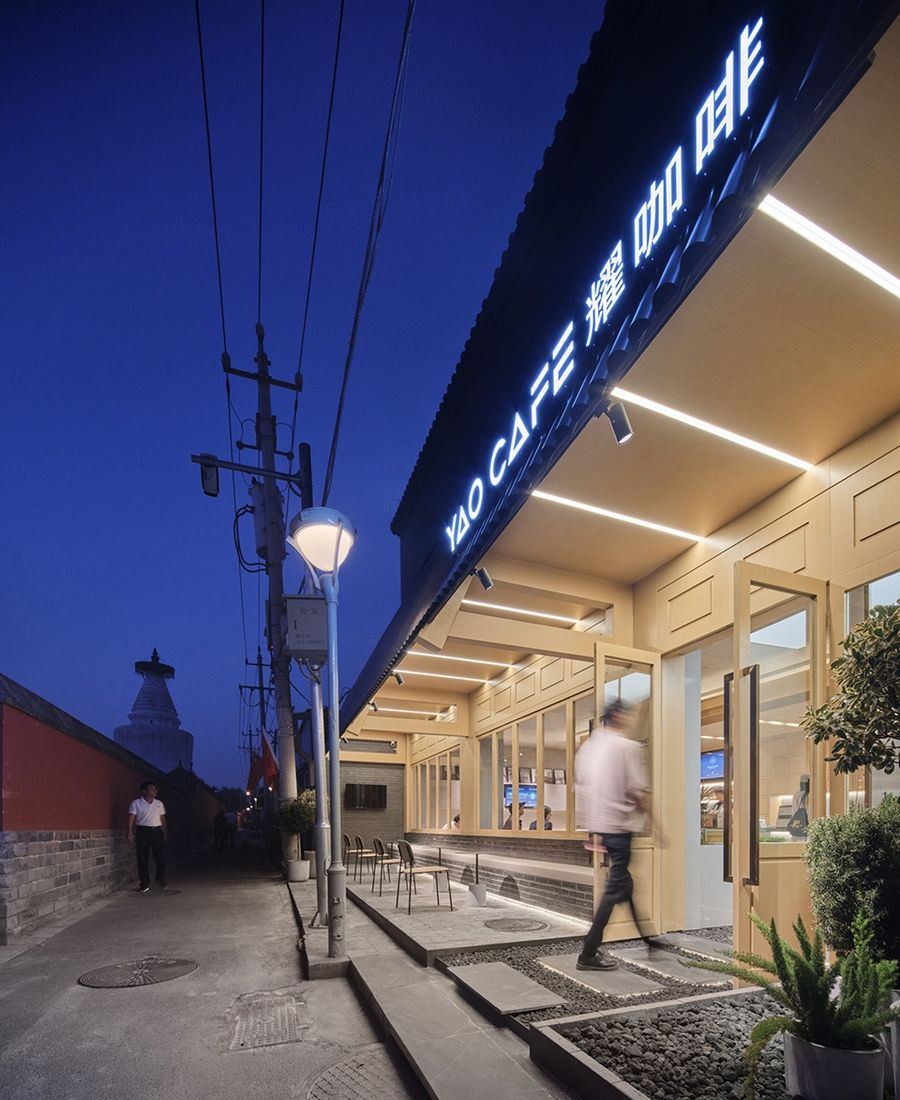
建筑師將白塔寺藥店西側(cè)部分圍墻拆除并加入新的立面與外擺空間,將白塔寺東夾道紅墻納入咖啡館的視野范圍內(nèi),互相成為彼此的景觀。將中國古典木架構(gòu)體系抽象運用于外立面,并用現(xiàn)代材料模擬傳統(tǒng)屋面瓦片,實現(xiàn)傳統(tǒng)與現(xiàn)代相結(jié)合的立面效果。
Part of the pharmacy’s walls located at the west side were replaced with a new facade and outdoor space. The temple’s red wall on the east side was included in the field of view of the cafe, and they become each other’s landscape. The traditional Chinese wood frame system is abstracted and applied to the facade design. Modern materials are used to simulate traditional roof tiles, combining the old and the new technology for the fa?ade.
▼由入口望向室內(nèi)空間,View from the main entrance to the interior ?呂博
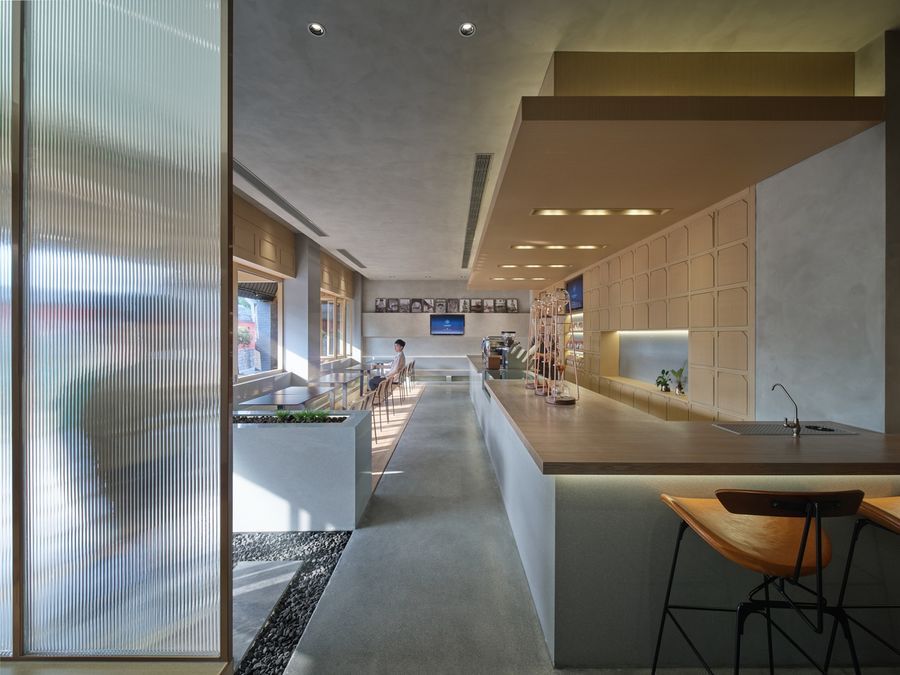
▼從室內(nèi)望向入口處,View from the interior to the main entrance ?呂博

▼靠窗布置座位區(qū),Seating area beside the window ?呂博
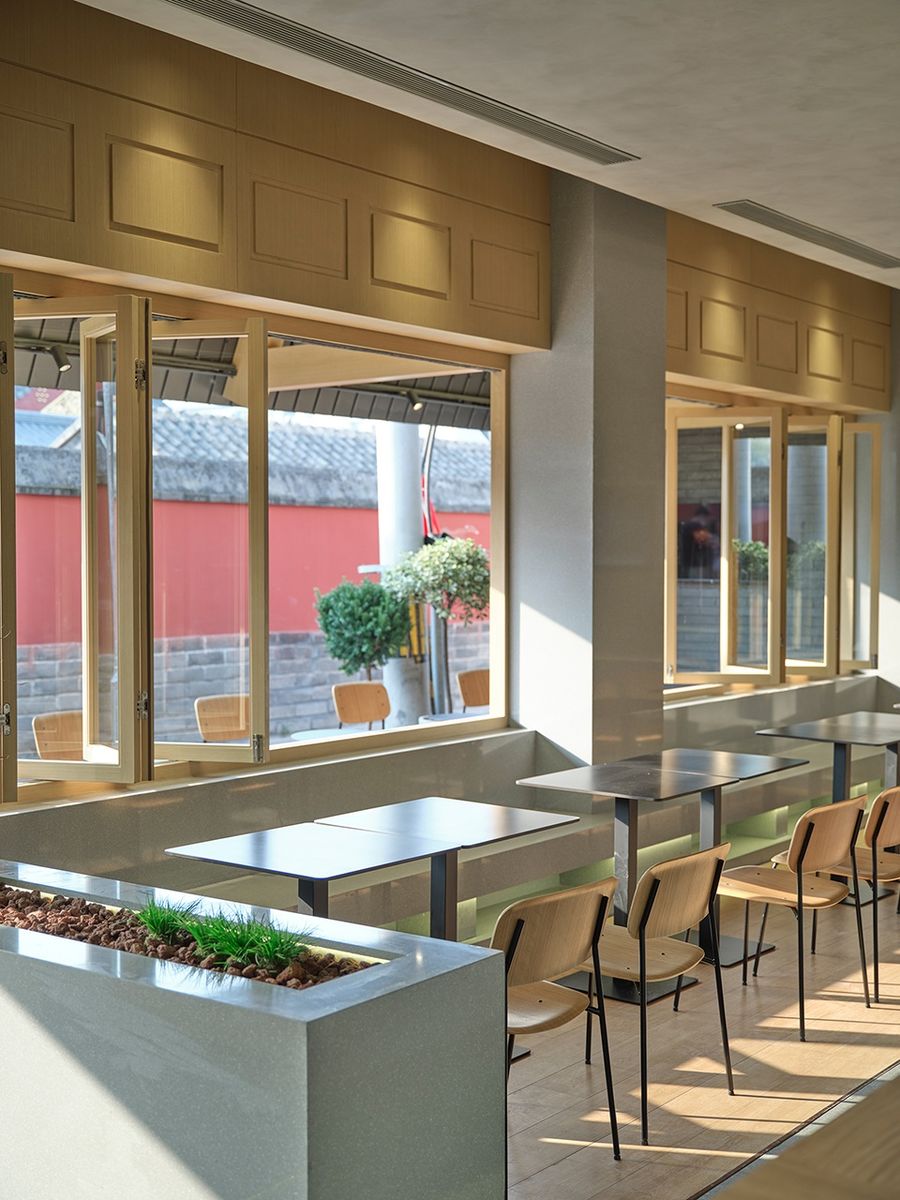
▼從內(nèi)部看向室外的紅墻,View from the interior to the red wall ?呂博

傳統(tǒng)藥店建筑的現(xiàn)代演繹
Modern interpretation of a traditional pharmacy architecture
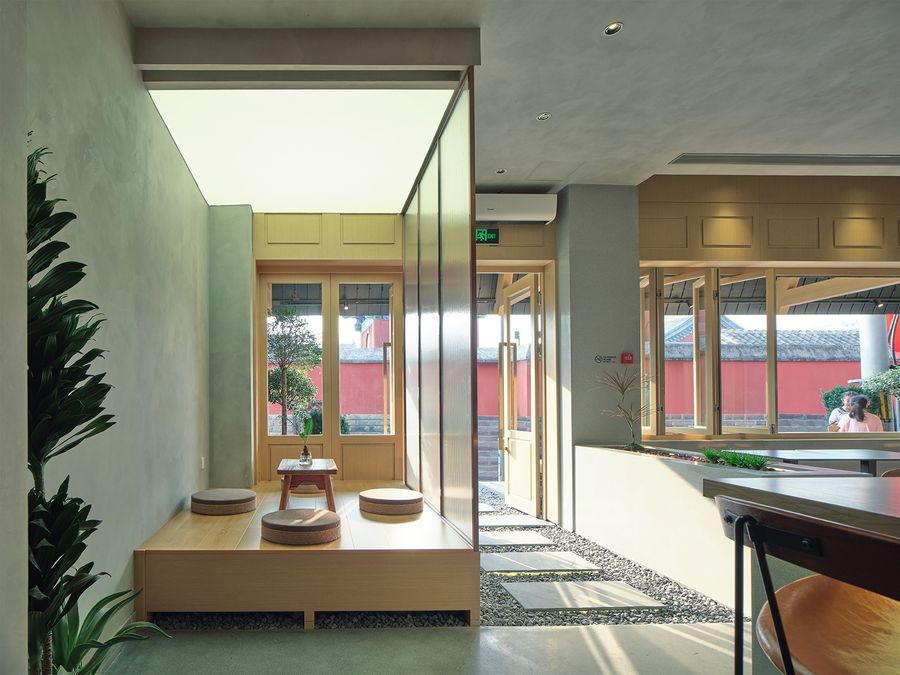
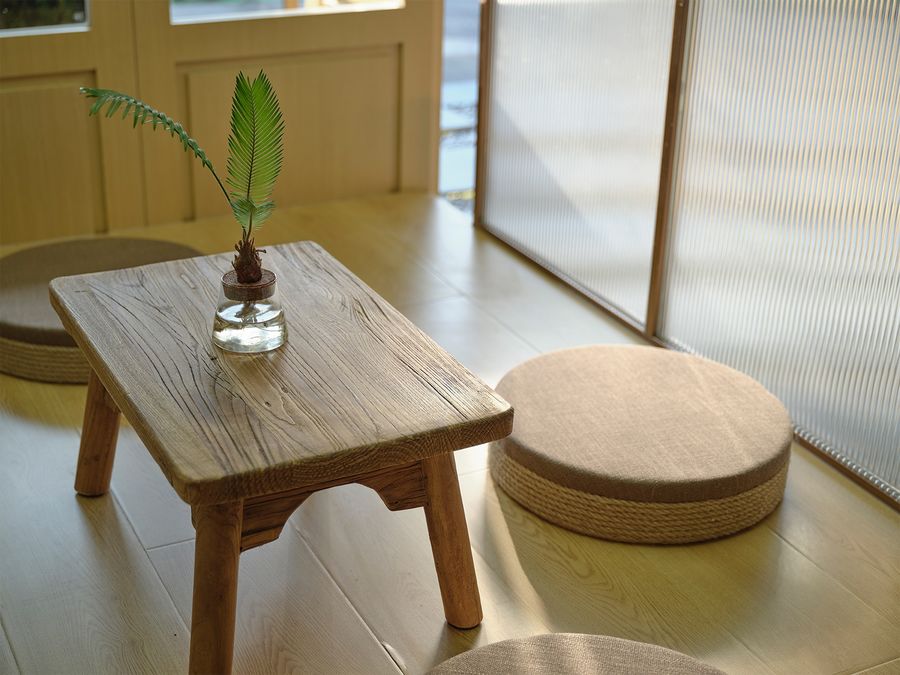
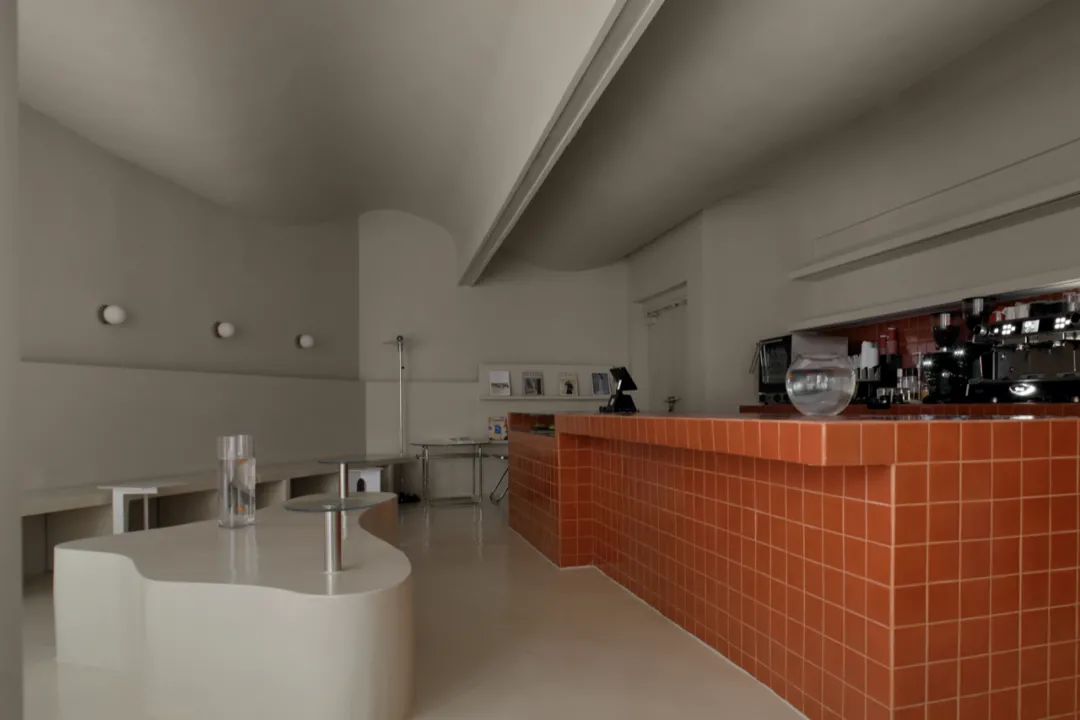
從北京建筑傳統(tǒng)青磚木構(gòu)的配色中提取灰色與木本色,運用在建筑內(nèi)外元素中。用現(xiàn)代的材料重新演繹傳統(tǒng)空間美學。將傳統(tǒng)中藥店的“藥斗”抽象重組,形成新的吧臺背景陳列。將傳統(tǒng)建筑中的“坐榻”引入到咖啡館,形成半私密的小隔間。
The gray and the natural wood colors of the interior and exterior elements are extracted from the traditional blue bricks and wood structures used in Beijing’s architecture – using modern materials to redefine traditional aesthetics. The “medicine drawer” of the traditional Chinese medicine store is transformed into a new bar display cabinet. “Sitting area” in traditional architecture is introduced into the cafe to form a semi-private cubicle.
▼入口與坐榻空間,Main entrance with seating area ?呂博
▼坐榻家具細部,Detail of furniture ?呂博
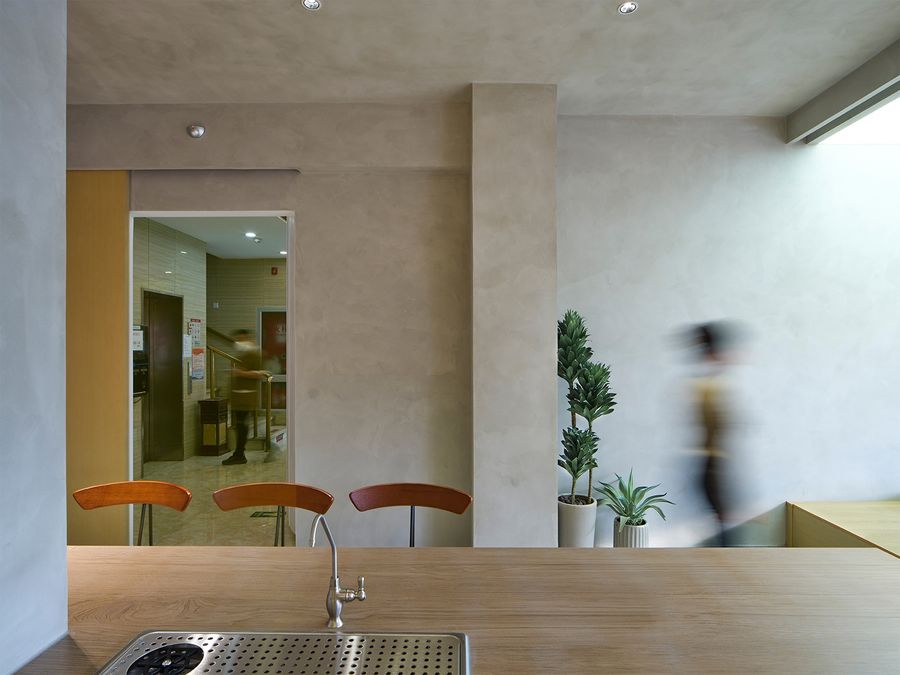
▼自動門后為白塔寺藥店的電梯等候廳,Behind the automated door is the lift lobby of the Baita Temple Pharmacy ?呂博
俯視妙應(yīng)白塔寺
Overlooking the Miaoying Baita Temple
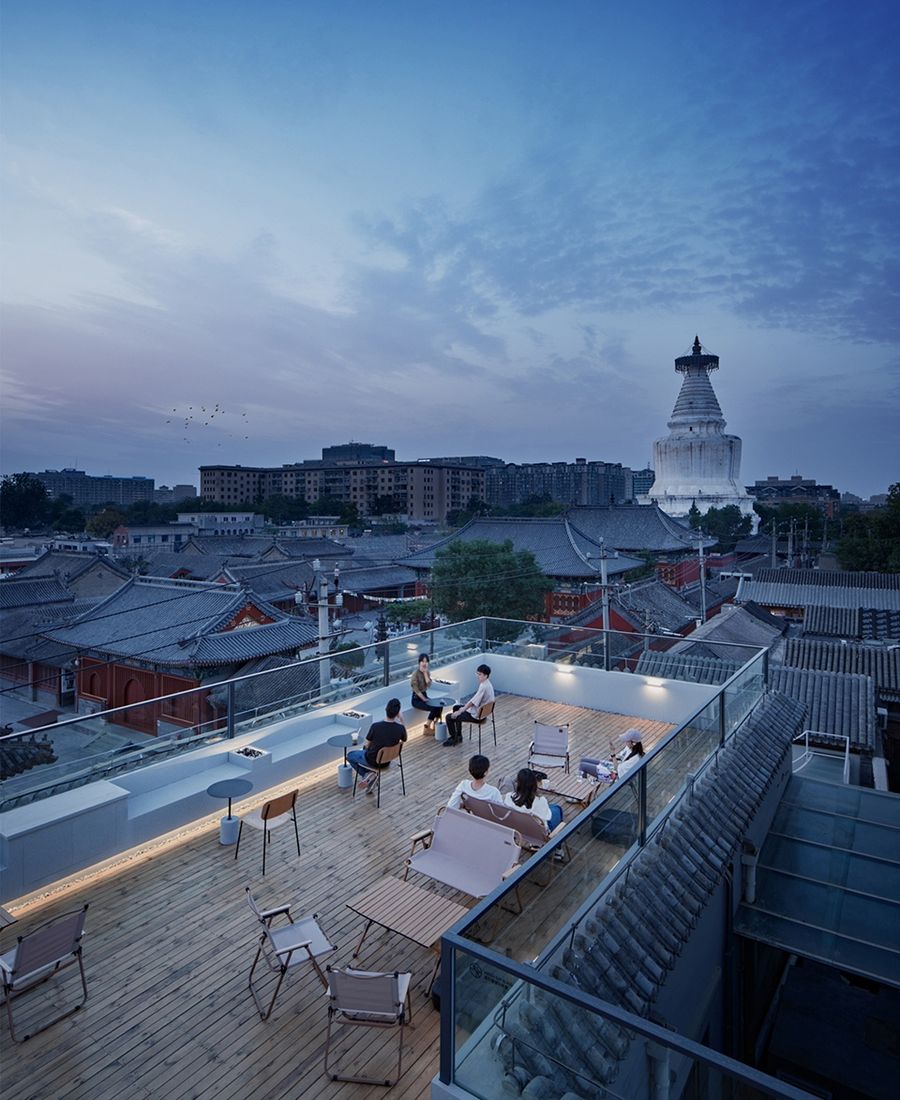
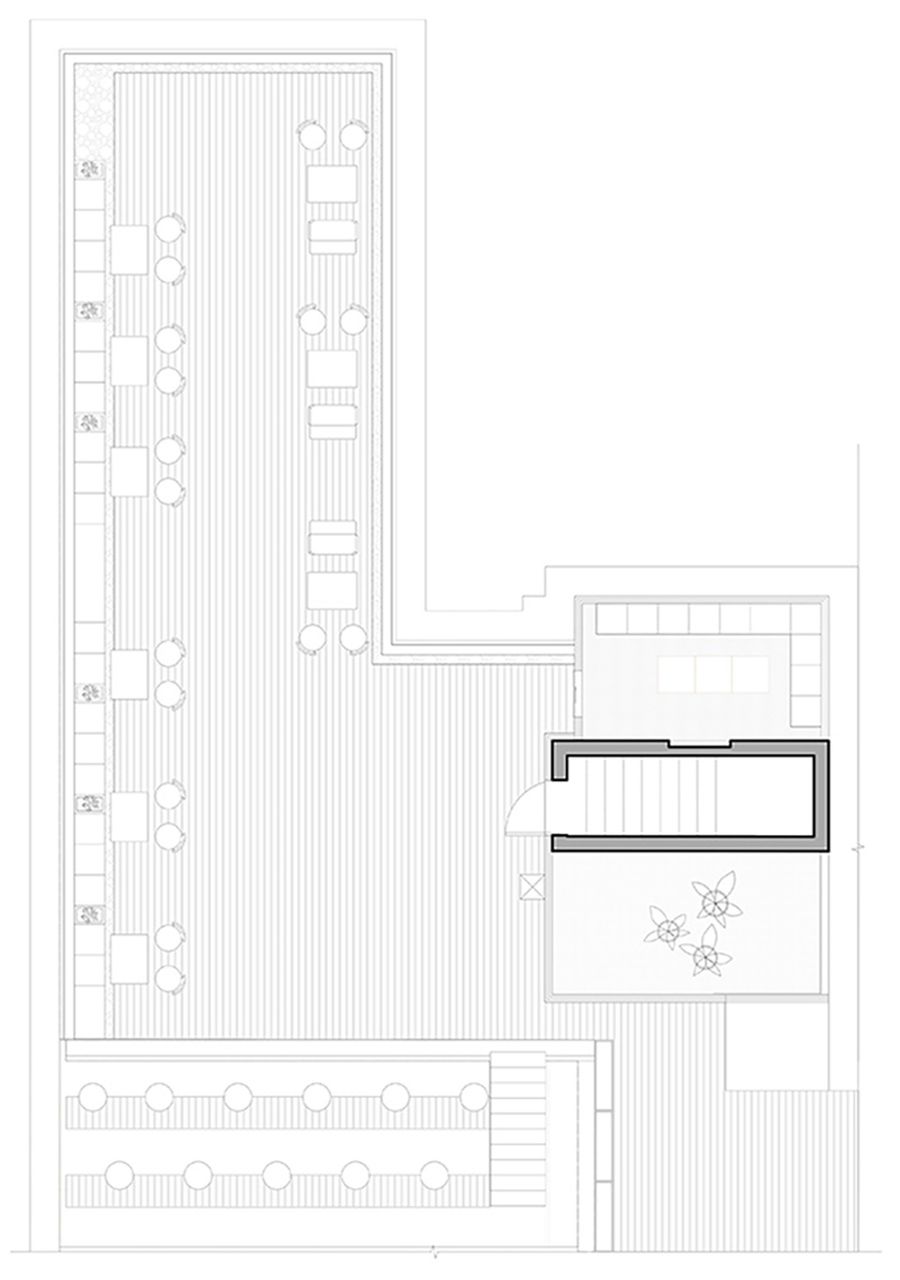
咖啡館與白塔寺藥店共享屋頂景觀平臺,可鳥瞰妙應(yīng)白塔寺的庭院與白塔。西側(cè)水磨石臺面提供休閑座椅的功能,同時遮擋屋頂?shù)目照{(diào)設(shè)備管線。
The cafe and Baita Temple Pharmacy share the same rooftop viewing deck, offering a bird’s-eye view of Miaoying Baita Temple’s courtyard and the White Dagoba. The West terrazzo countertop provides multi-usage – a leisure seating and a shelter that covers the air-conditioning piping on the roof.
▼屋頂平臺提供了良好的視野,Rooftop viewing deck provide a magnificent view ?呂博
▼入口夜景,Main entrance night view ?呂博
▼首層平面,Ground floor plan ?八作建筑設(shè)計事務(wù)所
▼屋頂平面,Rooftop floor plan ?八作建筑設(shè)計事務(wù)所
項目名稱:Yao Cafe 耀咖啡
項目類型:建筑
設(shè)計方:八作建筑設(shè)計事務(wù)所
公司網(wǎng)站:http://www.bazuo.com.cn
聯(lián)系郵箱:[email protected]
項目設(shè)計&完成年份:2022
項目合伙人:王淼
項目建筑師:曲茂琨
設(shè)計團隊:英紫薇、喬麟然
項目地址:北京市西城區(qū)阜成門內(nèi)大街165號1幢一層白塔寺藥店西側(cè)
建筑面積:86㎡
攝影版權(quán):呂博
客戶:北京金象復星醫(yī)藥股份有限公司
Project name:Yao Cafe
Project type: Architecture
Design:BAZUO Architecture Studio Co., Ltd.
Website:http://www.bazuo.com.cn
Contact e-mail:[email protected]
Design year&Completion Year:2022
Partner: Wang Miao
Designer & Team: Qu Maokun, Ying Ziwei,Qao Linran
Project location:Xicheng qu,Beijing,China
Gross built area: 86㎡
Photo credit: Lv Bo
Clients: Beijing Golden Elephant Fuxing Medical&Pharmaceutical Co., Ltd
 ?
?
更多相關(guān)內(nèi)容推薦











評論(0)