

 上傳3D模型
 上傳SU模型
 合成全景
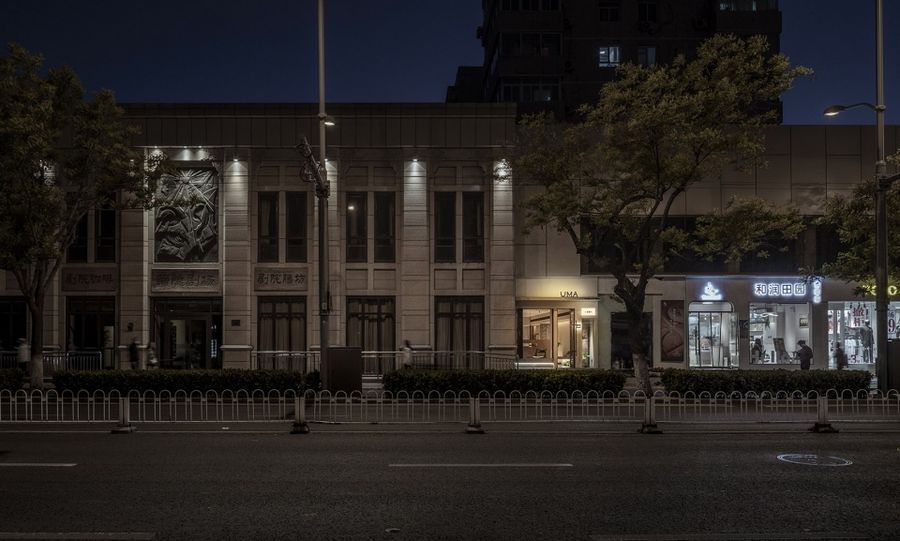
合成全景這次將要改造的項目位于東四南大街,地點位于人民藝術劇院菊隱劇場旁邊,只有一墻之隔,門前正對的就是史家胡同。初勘現場,便被門前車水馬龍的街景吸引,但是隨之而來的也面臨很多問題,如何能夠讓改造以后的空間能夠融入街道,以及如何給予一個“不規則空間”更多的可能性與生命力,妥善處理空間的各種規格及材料的承重柱體,讓空間整體更為和諧統一是本次改造的重點。
The project for renovation is situated adjacent to the People’s Art Theater Juyin Theater on Dongsi South Street, with Shijia Hutong merely separated by a wall. The vibrant street ambiance at the entrance caught our attention during the initial site survey. However, several challenges emerged, including the integration of the renovated space into the street and the exploration of additional possibilities and vitality for this “irregular space”. The primary objective of this renovation is to address the structural concerns of various load-bearing columns while creating a harmonious and cohesive overall space.
▼項目外觀概覽,Exterior Overview ? 金偉琦
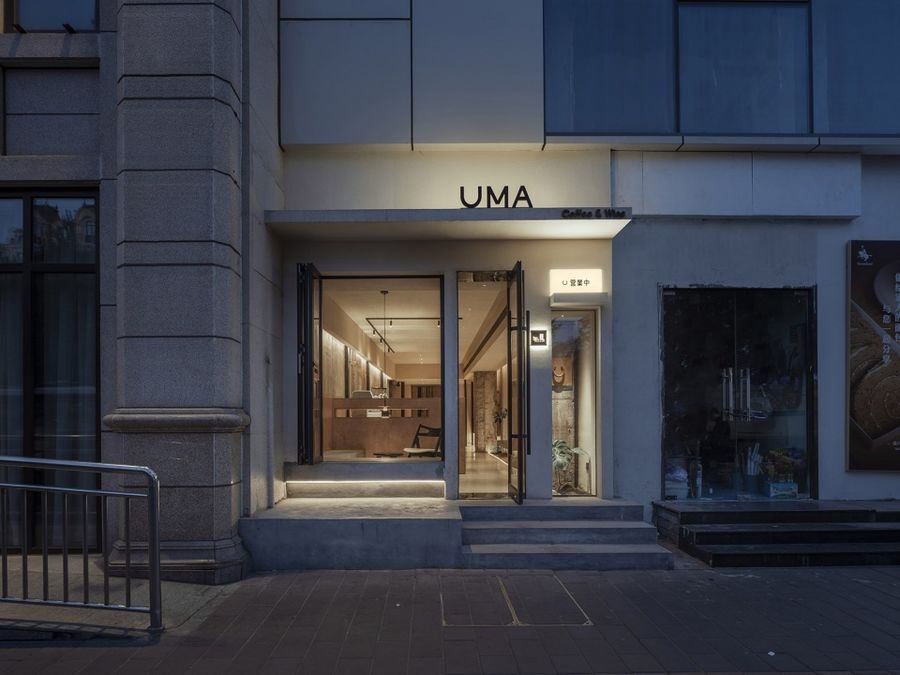
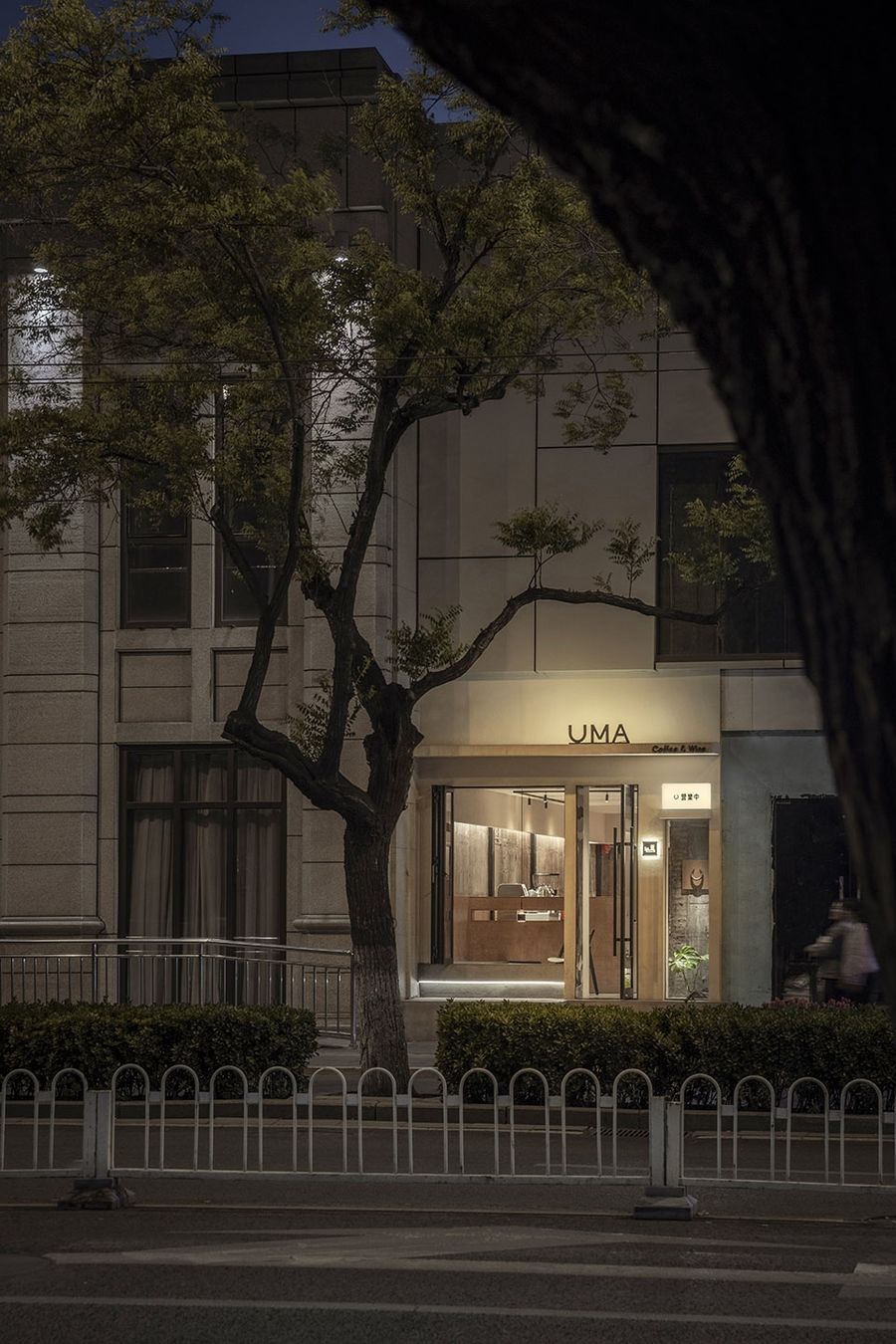
外立面和“隔壁”的墻體都保持了一致的顏色,希望這樣的方式,讓空間能夠能多的融入或者“消隱”在街道里,留下的只是窗戶內的內容。在沿街面的櫥窗位置,用空間原本的混凝土承重柱作為背景,然后用空間內部將要使用到的涂料作為補充,然后把空間拆舊留下來的金屬重新造型成馬蹄的形狀,懸掛在內部將要用到的樺木海洋板上,下方的土壤直接穿過柱子,延伸到整個空間的盡頭,一顆龜背竹借著土壤向著東方生長,這樣的設置作為整個空間的“編者按”,索引整個空間。
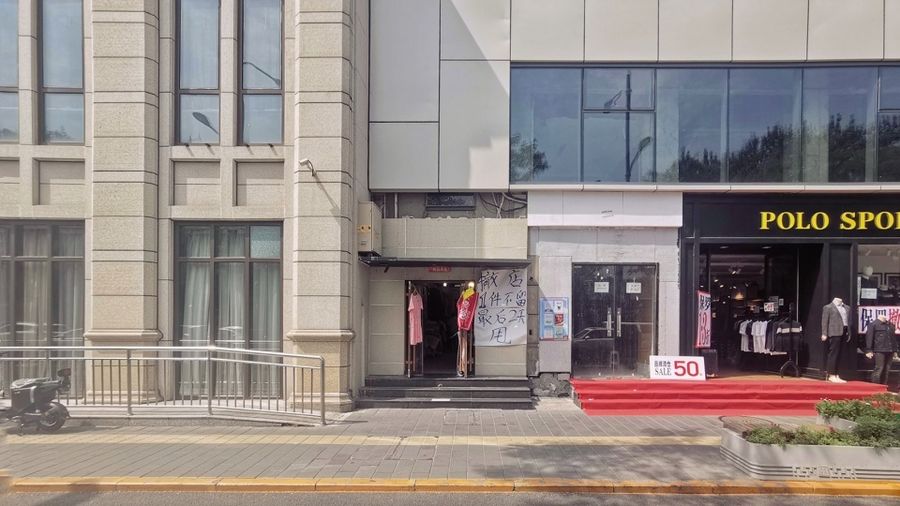
▼改造前狀態,Before the renovation
The exterior and the adjacent wall are maintained in the same color to enable the space to seamlessly blend in with the street or even “disappear,” thereby drawing attention solely to the contents displayed within the windows. Along the storefront facing the street, the materials employed in the space are thoughtfully curated. The original concrete load-bearing columns serve as a backdrop, complemented by coffee-colored paint to be applied within the space. The remaining metal from the demolition process is artistically reshaped into horseshoe forms and suspended on birch ocean boards that will be incorporated into the interior. The yellow soil below is intentionally directed through the columns, extending throughout the entire space. In addition, a bamboo plant gracefully grows towards the east, nourished by the yellow soil, symbolizing an “editor’s note” for the entirety of the space.
▼盡量融入街景,并成為街景的一部分,Blend into the street scene and become an integral part of it ? 金偉琦
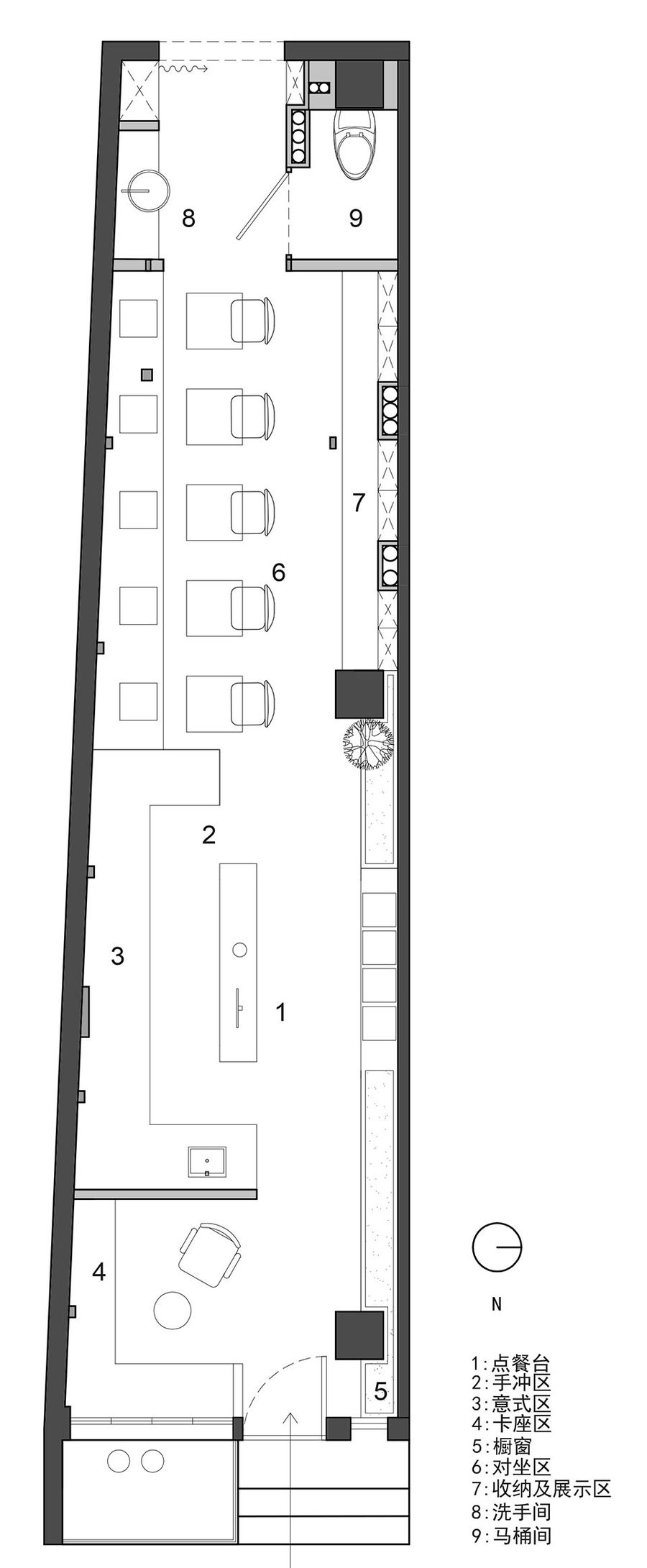
這是一個狹長的空間,因為朝向原因,下午空間的最末端幾乎沒有什么自然光線。因此在空間的布置上,將空間安置成為四段,為了把最好的窗外街景給到客人,并希望用餐的客人成為街景的一部分,所以在入口的位置設置了座椅區,然后將中段的位置作為咖啡的點單及制作區域,通過更開放的動線,讓咖啡師給前段和中后段的坐位提供服務都更為方便,在空間的最末端,因為已經幾乎沒有什么自然光,所以作為洗手間來使用。
▼分析圖,diagram ? 馬志成
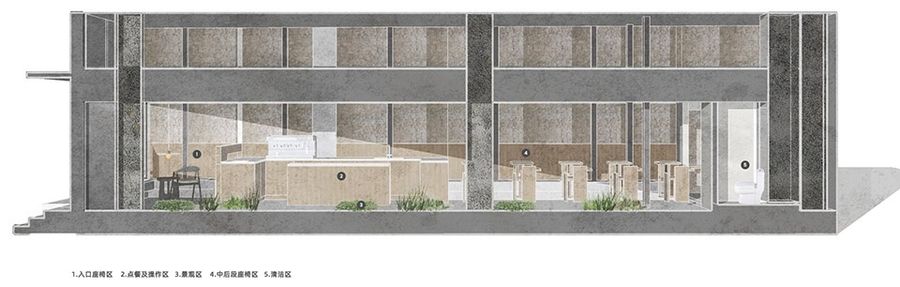
This narrow space is characterized by a lack of natural light in the afternoon due to its orientation. To address this, the space has been divided into four sections, each designed to offer guests the best possible view of the street outside. The seating area is strategically positioned at the entrance to maximize exposure to natural light. Through this renovation, the boundaries between indoors and outdoors have been deliberately blurred, allowing the interior to seamlessly incorporate the changing seasons and vibrant street scenes. The middle section serves as a dedicated area for coffee ordering and preparation, facilitating an open workflow that enables baristas to conveniently serve guests in all three sections. Finally, the end of the space, where natural light is scarce, has been allocated for restroom facilities.
▼室內空間概覽,Indoor Space Overview ? 金偉琦

在材料的選擇上,貫穿了新生于舊的邏輯,讓原始的建筑結構柱,紅磚及混凝土墻體都重見光明,保留空間的“骨骼”,并在新材料的呼應下,得以煥發新的生命。新材料的選擇上,在人能夠接觸到的位置,都盡量選擇了相對溫潤的木板,另外其他的所有新建的頂面、墻面、地面上,都混入咖啡粉、不增加任何色漿,直接調色批刮處理,希望因為這次因為“咖啡”而改造的這個場所,就用“咖啡”讓材料統一純粹,通過這樣的方式,給予空間使用者“原湯化原食”的體驗。
In terms of material selection, the concept of “rebirth from old” is emphasized, highlighting the restoration of the original building structure, columns, red bricks, and concrete walls. Through the integration of new materials, these elements are revitalized. To create a warm and inviting atmosphere, wood panels are predominantly chosen in areas where people can interact with them. Furthermore, all newly constructed ceilings, walls, and floors are blended with coffee powder, without the addition of pigments, and directly tinted and scraped. This deliberate approach aims to provide space users with an authentic and unadulterated sensory experience, emphasizing the use of raw materials throughout.
▼入口的座椅區,The seating area ? 金偉琦

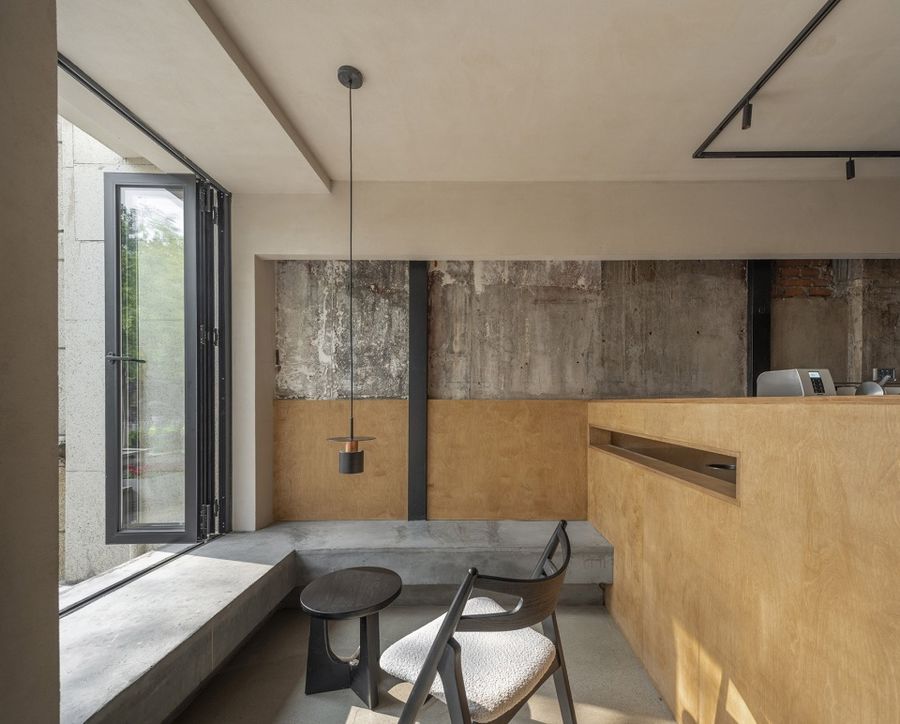
為了盡可能的引入自然光線,選擇了能夠全部打開的折疊窗,并希望通過這樣的改造,模糊室內外的邊界,把四季和街景一并拉到室內深色的豎向金屬承重柱都被完整的保留。
To maximize the influx of natural light, foldable windows that can be fully opened have been chosen. Through this renovation, the intention is to blur the boundaries between the interior and exterior, seamlessly integrating the changing seasons and street scenes into the indoor space.
▼從室內看座椅區,From the interior perspective, the seating area showcases preserved dark vertical metal load-bearing columns in their entirety ? 金偉琦
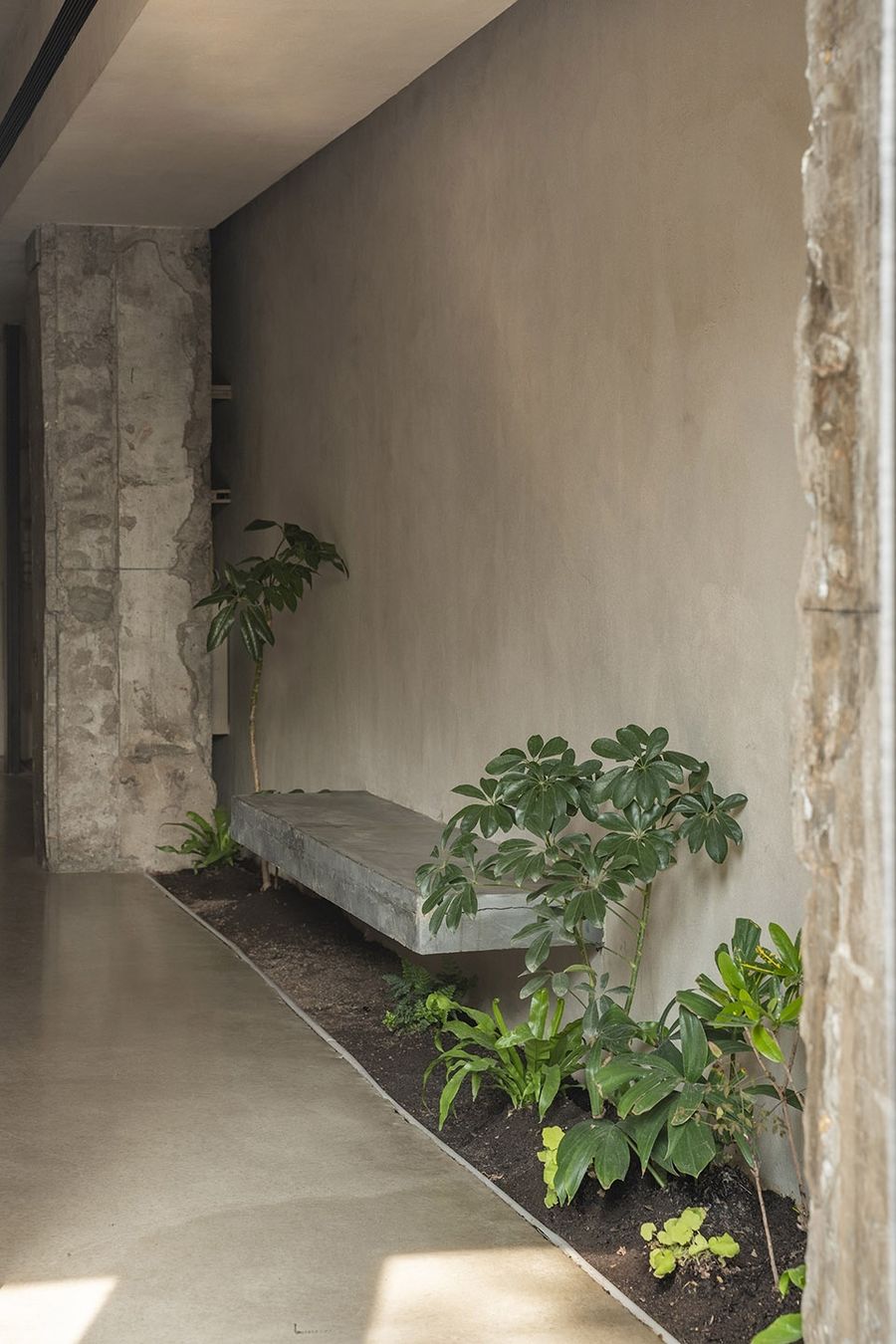
從櫥窗處開始貫穿空間的綠植作為鏈接兩個混凝土柱體的“紐帶”,上午陽光可以從柱子與墻體中間的縫隙鉆進來到綠植區域,營造特別的陰翳美感。
Starting from the display window, the green plants that permeate the space serve as a “link” connecting the two concrete columns. In the morning, sunlight filters through the gaps between the columns and the walls, creating a unique interplay of shadows in the greenery area, adding a touch of enchanting beauty.
▼綠植及等餐座椅區,Green and other dining seating area ? 金偉琦
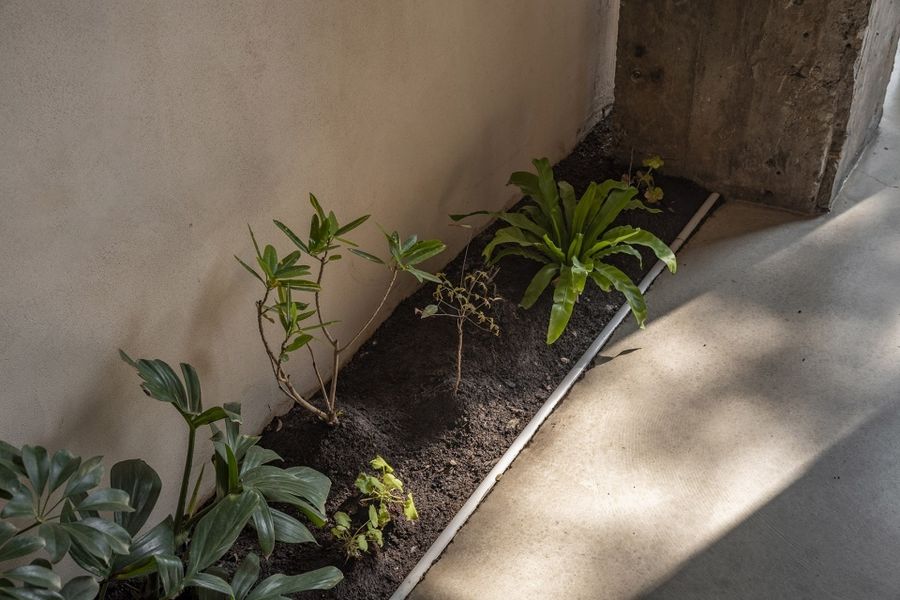
▼綠植區域細部,Details of the green plant area ? 金偉琦
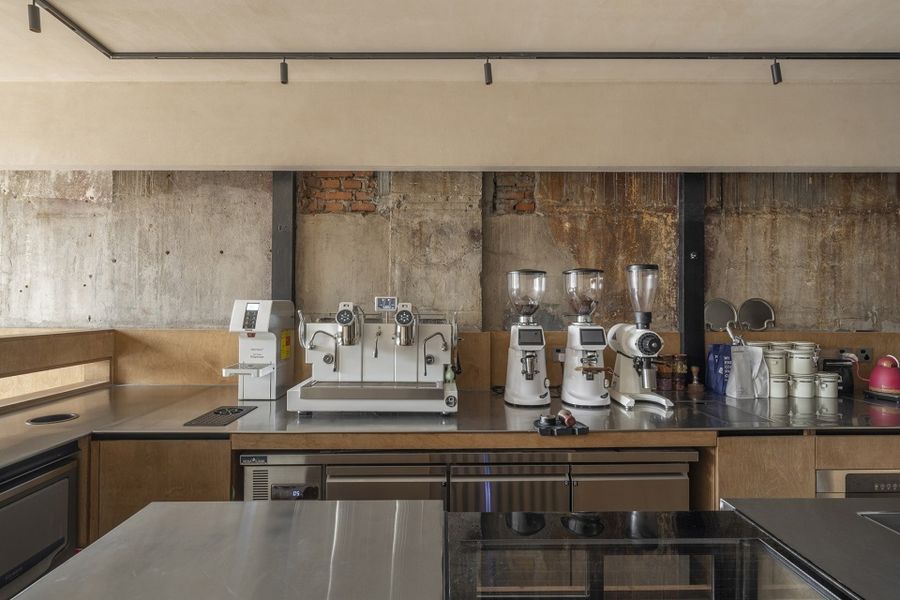
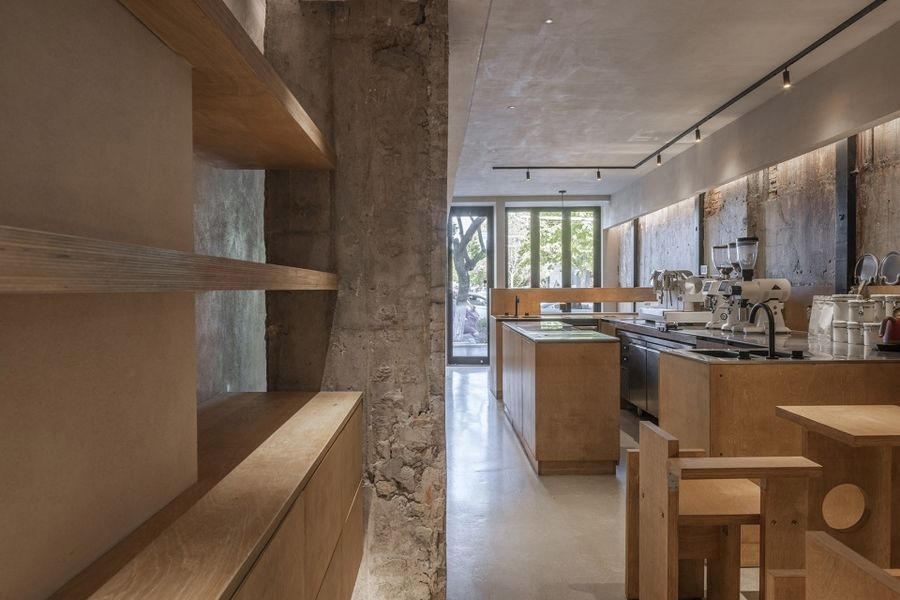
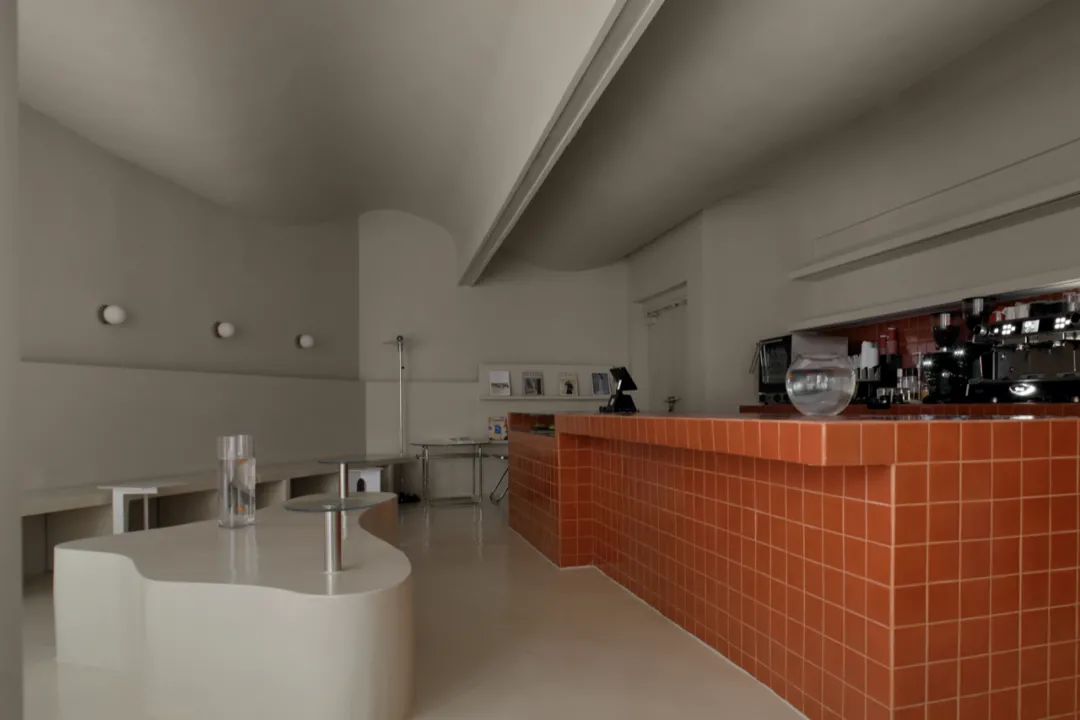
中段的點餐及咖啡操作吧臺區別傳統的吧臺,空間的兩側都設置了開口,讓服務動線更便捷高效。
The ordering and coffee preparation counter in the middle section differentiates itself from traditional counters by featuring openings on both sides of the space. This design allows for more efficient and convenient service workflow.
▼吧臺區概覽,Bar area overview ? 金偉琦
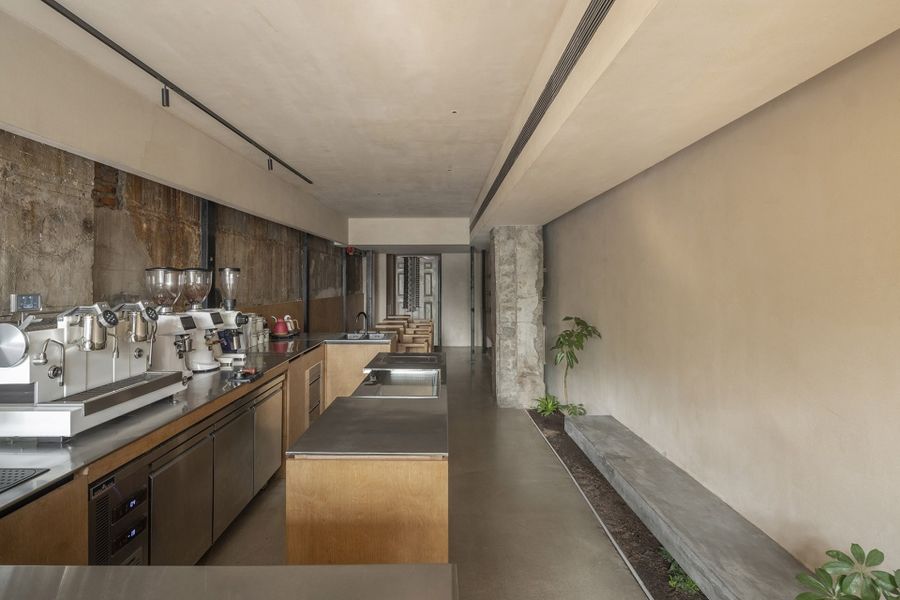
▼從室內看向入口處,View from inside to the entrance ? 金偉琦
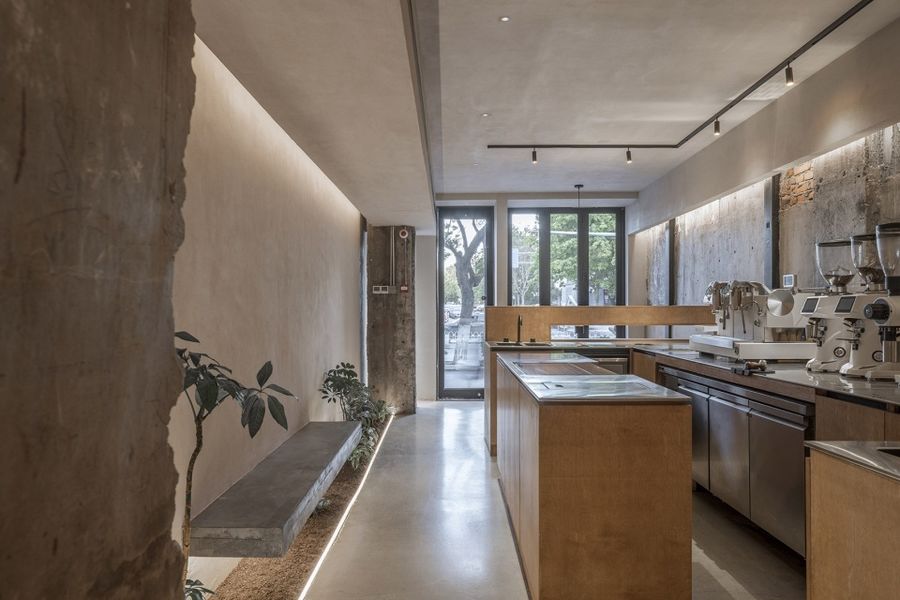
▼咖啡操作吧臺,Coffee preparation bar ? 金偉琦
咖啡點單對面的位置,在綠植區的上方現澆了混凝土的結構,作為等餐小坐的區域來使用。
Opposite the coffee ordering area, above the greenery section, a freshly poured concrete structure has been incorporated to serve as a seating area for waiting and relaxation.
▼走廊看向后段座椅區,
View from the hallway towards the rear seating area ? 金偉琦

座椅區的對面作為一些日常物品的收納以及酒水、圖書的展示功能出現,下方同樣把從櫥窗起點的土壤做延續。
Across from the seating area, the space serves as a storage area for daily items and also showcases beverages and books. The yellow soil, originating from the starting point of the display window, extends beneath this area as well.
▼后段座椅區,Back-end seating area ? 金偉琦
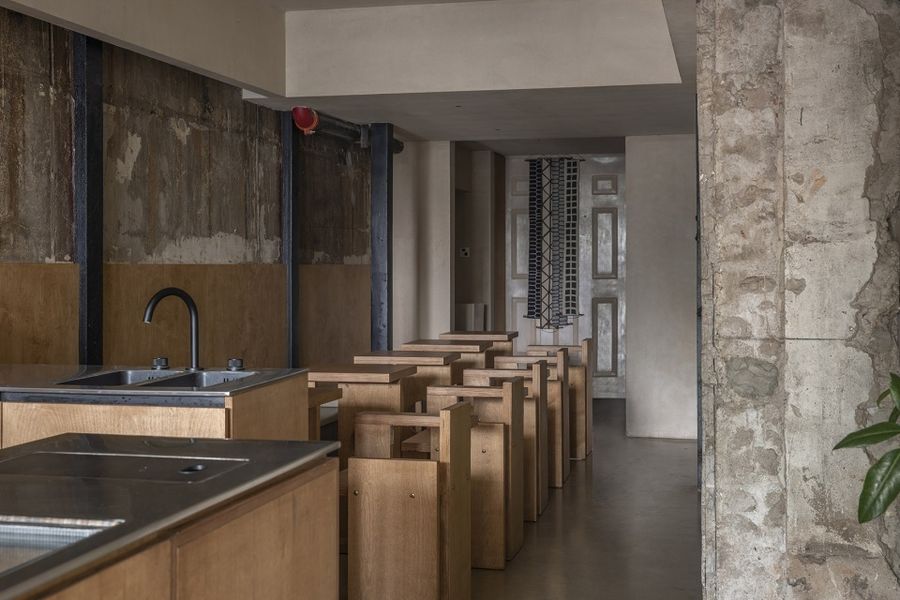
▼座椅及收納區關系,Relations of seating area and reception area ? 金偉琦
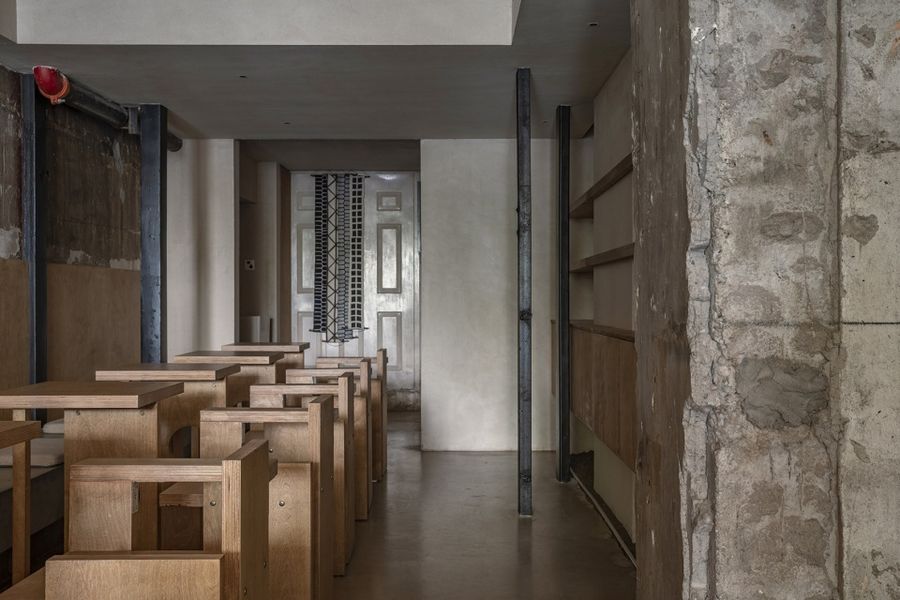
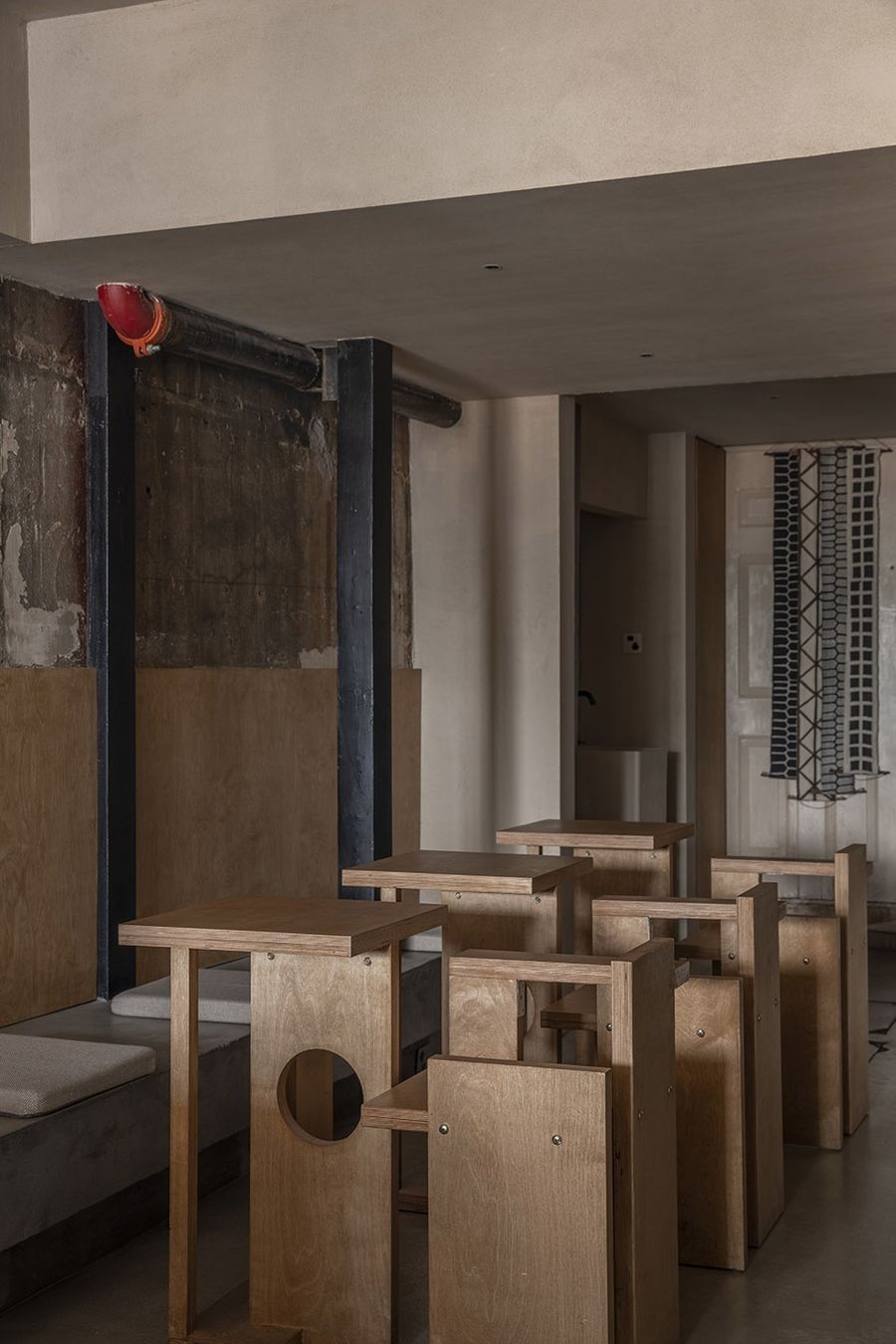
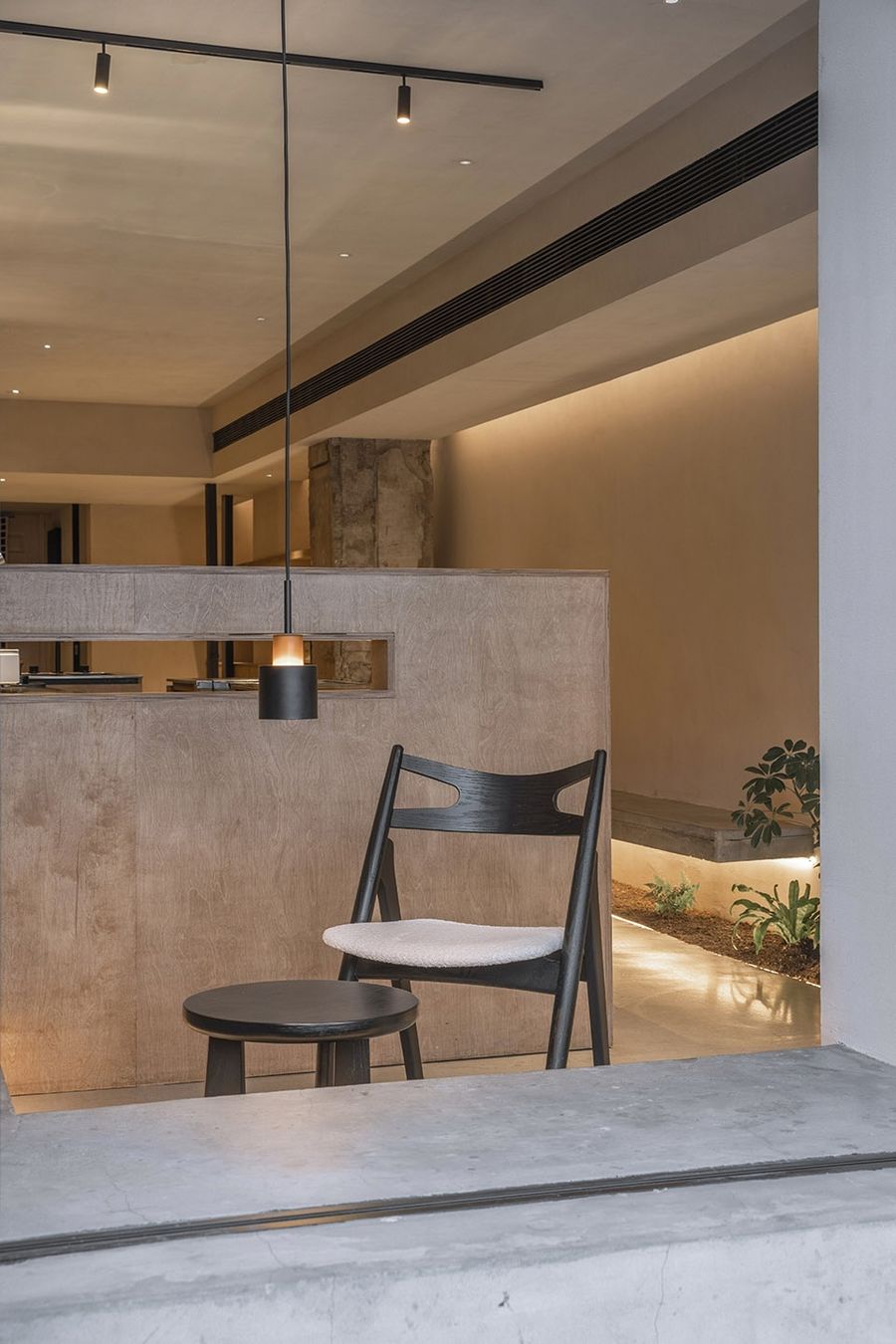
為了追求和空間其他的材料以及形式的統一,營造一個相對更純粹整合的空間,餐桌和座椅直接用同樣的木板手工制作完成。
In order to achieve harmony and unity with the other materials and forms within the space, a deliberate effort was made to create a relatively pure and integrated environment. As a result, the dining tables and chairs were handcrafted using the same wooden panels, ensuring a cohesive aesthetic throughout.
▼座椅區細部,Seating Area Detail ? 金偉琦
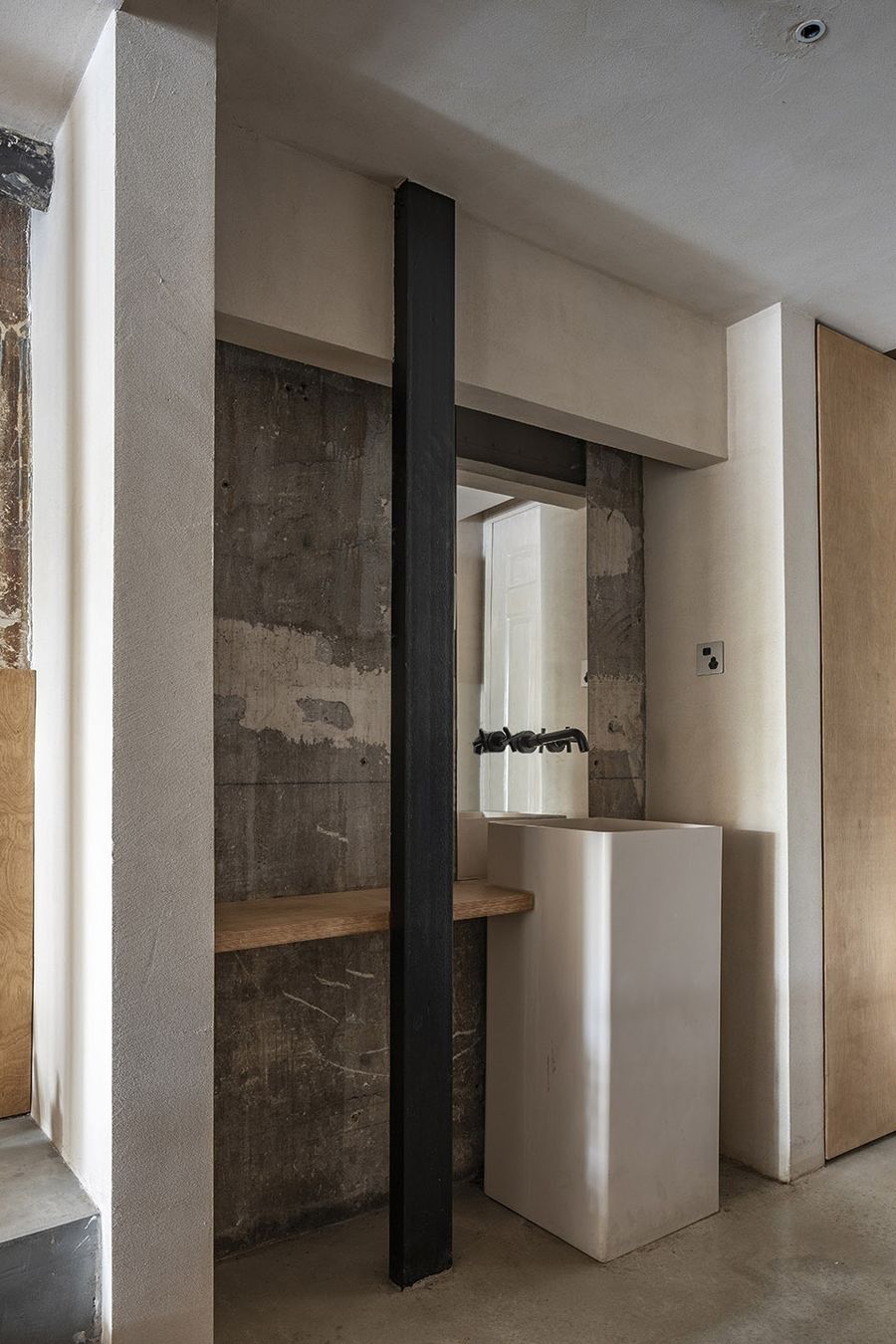
末段的衛生空間把洗手和馬桶間單獨分離,提高空間的使用效率。
In the final section, the sanitary facilities have been thoughtfully designed to separate the handwashing area from the toilet area, maximizing the efficiency of space utilization.
▼洗手池及清潔區,Sinks and sanitary areas ? 金偉琦
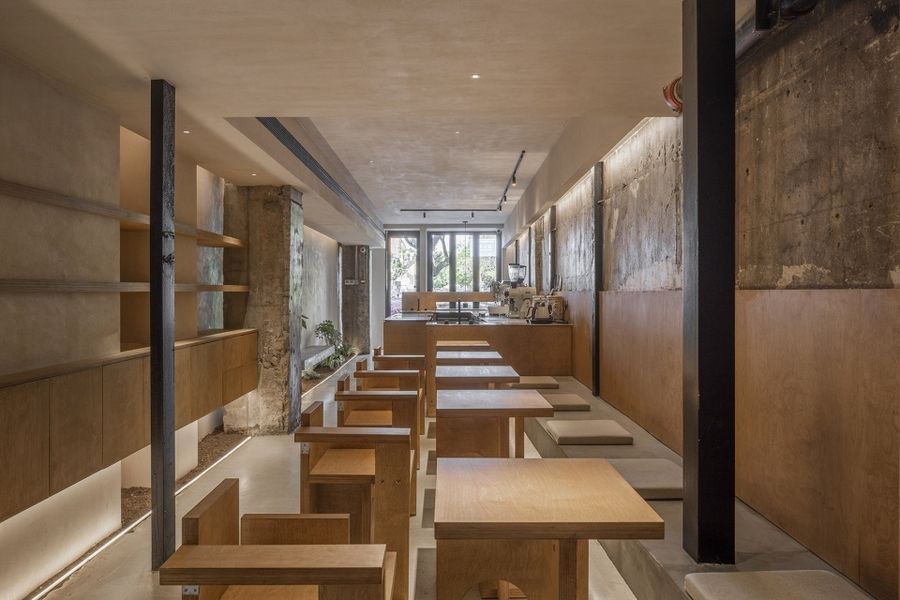
空間由于朝向問題,下午開始,最深段沒有什么采光,因此設置了兩條貫穿空間的氛圍燈結合射燈,營造更舒適的用餐體驗。
Due to its orientation, the deepest section of the space lacks natural light in the afternoon. To address this, two sets of ambient lights, combined with spotlights, have been installed to traverse the entire space, creating a more comfortable dining experience.
▼下午時分的后端座椅區,Back-end seating area in the afternoon ? 金偉琦
▼空間細部,Details of the space ? 金偉琦
▼夜間燈光概覽,Night lighting overview ? 金偉琦
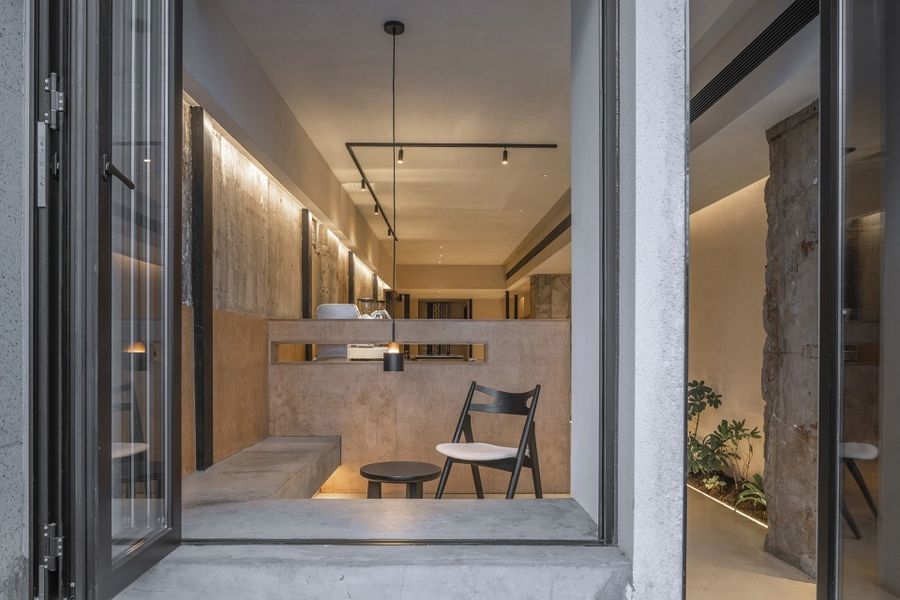
▼空間細部,Details of the space ? 金偉琦
▼深夜后點亮街景,Light up the street after night ? 金偉琦
▼平面布置圖,Floor Plan ? 馬志成
項目名稱:午馬咖啡
項目類型:室內改造
竣工時間:2023年1月
室內面積:48㎡
室內設計:馬志成
照明設計:張帆
項目攝影:金偉琦
Project Name: UMA Coffee
Project Type: Interior Renovation
Completion Time: January 2023
Interior Area: 48㎡
Interior Designer: Ma Zhicheng
Lighting Designer: Zhang Fan
Project Photographer: Jin Weiqi
? 









評論(0)